Posted on Leave a comment

How to Use Thinning Shears to Add Texture Without Weakening the Hair

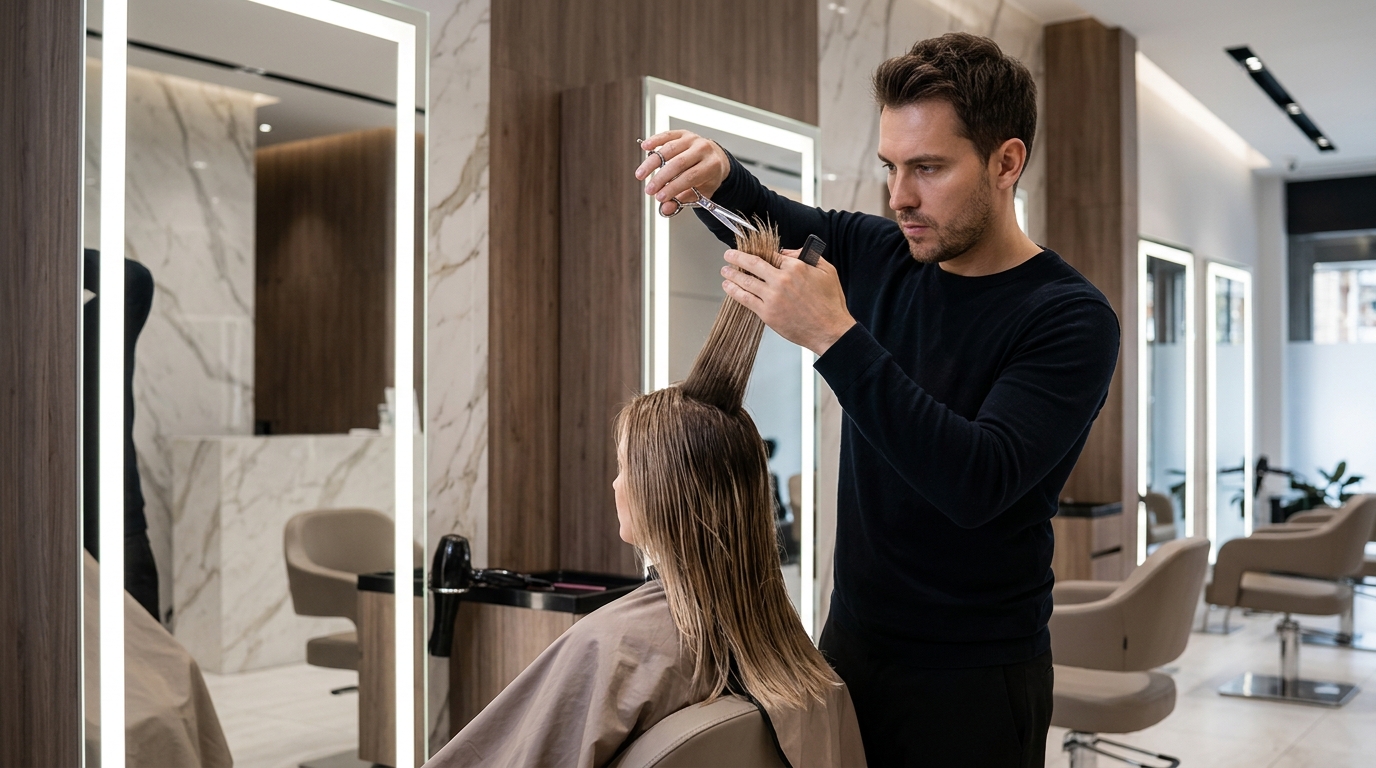
You reach for your thinning shears. You know they are powerful. You know they can remove bulk, blend lines, and create movement. But you also know they can be dangerous. Used incorrectly, they can leave visible lines, create holes in the hair, or weaken the density so much that the hair looks thin and damaged.

Thinning shears are not a shortcut. They are a precision tool. They require technique, intention, and restraint. The difference between a stylist who uses them well and a stylist who uses them poorly is not the tool. It is the approach.

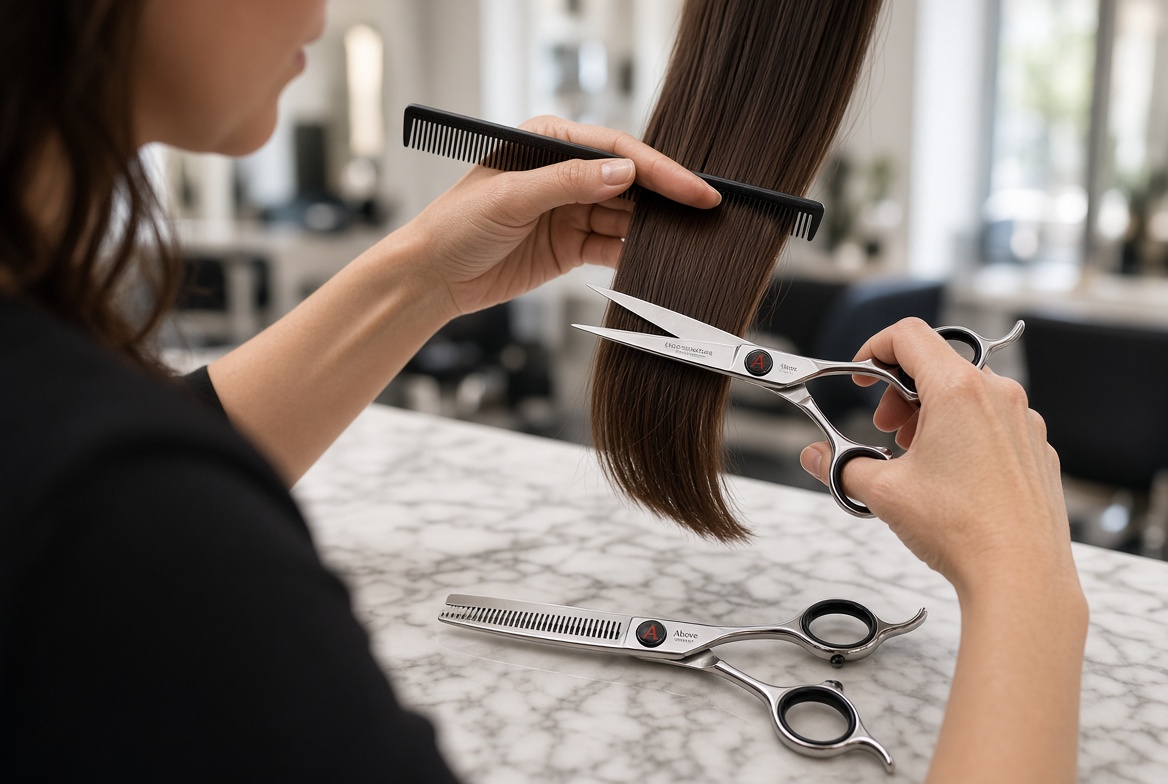
The first thing to understand is that thinning shears remove hair. That is obvious. But what is less obvious is that they remove hair in a specific pattern. The teeth cut some hairs and leave others intact. This creates texture and reduces bulk without changing the overall length. When used correctly, the result is movement and lightness. When used incorrectly, the result is visible lines, uneven texture, and compromised density.

The second thing to understand is that not all thinning shears are the same. The number of teeth matters. Shears with more teeth (30 to 40) remove less hair per cut. They are gentler. They are ideal for fine hair or for finishing work. Shears with fewer teeth (16 to 24) remove more hair per cut. They are more aggressive. They are better for thick hair or for bulk removal. Choosing the right shear for the task is the first step to using them well.

The third thing to understand is that you should never close the shears completely. When you close thinning shears all the way, you cut a straight line across the hair. That line becomes visible as a gap or a hole. Instead, close the shears partially. Let the teeth do the work. The hair is cut, but the line is soft. The result is texture, not a line.

The fourth thing to understand is where to use thinning shears. They belong on the interior of the hair, not the perimeter. Cut into the mid-lengths. Remove weight from the crown. Soften the connection between layers. Never use thinning shears on the ends of the hair. That is where the perimeter lives. Cutting the perimeter with thinning shears creates a wispy, uneven edge that looks thin and damaged.

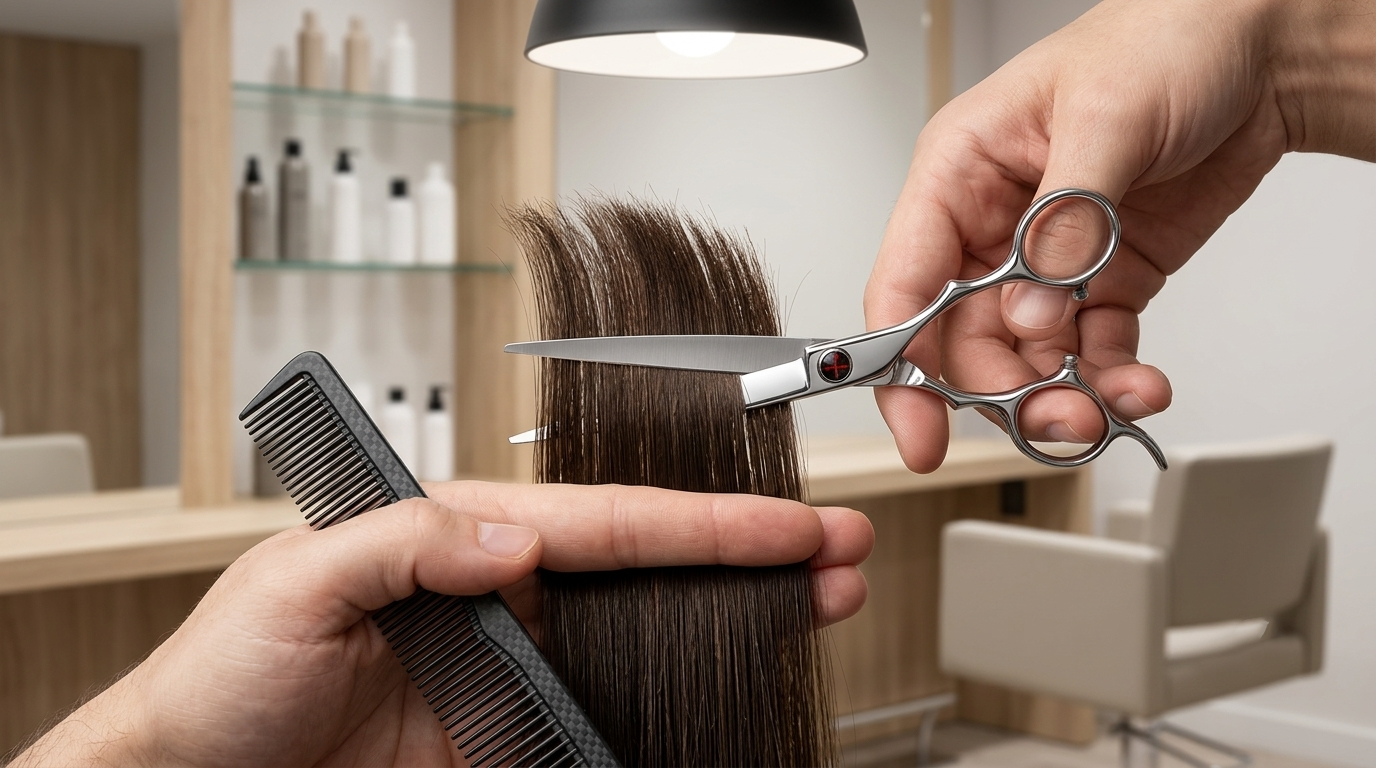
The fifth thing to understand is that thinning shears should be used in sections. Do not run them through the entire head in one motion. Work in small sections. One to two inches wide. Make two or three cuts per section. Lift the hair and cut into the mid-lengths. The result is subtle texture, not aggressive removal.

The sixth thing to understand is the direction of the cut. Cutting downward removes bulk from the interior. Cutting upward (toward the roots) creates lift and volume. The direction matters. If you want to remove weight, cut downward. If you want to create volume, cut upward. If you want both, alternate directions.

The seventh thing to understand is that thinning shears are not for every hair type. Fine hair cannot tolerate aggressive thinning. It will look sparse and damaged. Use thinning shears sparingly on fine hair. One or two cuts per section. Use a shear with more teeth. Thick hair can handle more aggressive thinning. It needs the weight removal. Use a shear with fewer teeth. Make more cuts per section.

The eighth thing to understand is that thinning shears do not replace good cutting technique. They are a finishing tool. Not a foundation. Cut the shape first. Establish the perimeter. Create the layers. Then use thinning shears to refine. If you use thinning shears to create the shape, you will end up with a shape that is uneven and weak.

The ninth thing to understand is that you should check your work constantly. After every few cuts, release the section and look at it. Is the texture even? Are there visible lines? Is the hair lying smoothly? If you see a line, go back and soften it with one or two more cuts. If you see a hole, you have cut too much. There is no way to put the hair back. Learn from the mistake and cut less next time.

The tenth thing to understand is that less is almost always more. The stylist who uses thinning shears aggressively is often the stylist who is trying to fix a problem that should have been fixed with a better haircut. Thinning shears are not a solution. They are a refinement. Use them sparingly. Use them intentionally. Use them with respect for the hair.

Thinning shears are a gift to the hairstylist. They can transform a heavy haircut into a light one. They can turn a blunt shape into a textured one. They can create movement and volume in ways that nothing else can. But they are also a weapon. They can destroy density. They can create holes. They can leave visible lines that haunt the client for weeks. The difference is not the tool. The difference is the hand that holds it. Hold it with care. Hold it with intention. Hold it with the knowledge that you are not just cutting hair. You are shaping confidence. And confidence deserves respect.

Posted on Leave a comment

How to Read Hair Before Cutting It (What the Texture Tells You About the Cut It Needs)

You pick up your shears. The client is in the chair. You have done the consultation. You know what she wants. But do you know what her hair wants?

Hair speaks. Not in words. In texture. In density. In elasticity. In the way it falls, bends, and springs. The best stylists do not just listen to the client. They listen to the hair. They let the hair tell them where the weight should sit, where the layers should fall, and where the perimeter should land.

Learning to read hair is not a talent. It is a skill. And like any skill, it can be learned. Here is how.

Start with your eyes before your hands. Look at the hair dry. Notice how it falls naturally. Does it lie flat against the head? Does it lift at the roots? Does it wave in one direction and bend in another? The hair’s natural fall is your blueprint. Cutting against it creates a constant battle. Cutting with it creates harmony.

Now look at the density. Part the hair in small sections. How much scalp do you see? High density means thick hair that needs weight removal. Low density means fine hair that needs weight preservation. Density dictates everything. A cut that works on thick hair will look sparse on thin hair. A cut that works on thin hair will look bulky on thick hair.

Now touch. Run your fingers through the hair. Feel the texture. Fine hair feels like silk or cotton. It slips through your fingers. Coarse hair feels like wire or wool. It has grip. Medium hair is somewhere in between. Fine hair needs blunt lines and minimal layering to look full. Coarse hair needs internal weight removal to prevent bulk.

Now stretch. Take a single strand of wet hair. Gently pull it between your fingers. Healthy hair stretches about thirty percent and returns to its original length. Hair that stretches and does not return is damaged. Hair that snaps immediately is brittle. Damaged hair needs protein and conservative cutting. Brittle hair needs moisture and very gentle handling.

Now observe the wave pattern. Straight hair reflects light evenly. Wavy hair has an S shape. Curly hair spirals. Coily hair zigzags. Each pattern requires a different cutting approach. Straight hair shows every imperfection. Wavy hair forgives minor unevenness. Curly hair needs dry cutting to account for shrinkage. Coily hair needs shape that follows the head, not fights it.

Now check the growth pattern. Find the cowlicks. Find the whorls. Find the direction changes. These are not flaws. They are features. Cutting against them creates perpetual problems. Cutting with them makes styling effortless. A cowlick at the crown is not a mistake. It is an opportunity to create volume where the hair already wants to lift.

Now assess the elasticity. This is the hair’s ability to return to its original shape after being stretched. High elasticity hair can handle tension and over-direction. Low elasticity hair will break or lose shape. Elasticity is health. Health determines how much you can manipulate the hair during cutting.

Now check the porosity. Run your fingers up a strand from end to root. Does it feel smooth? Low porosity. Does it feel rough or bumpy? High porosity. Low porosity hair resists moisture and holds style longer. High porosity hair absorbs everything but releases it quickly. High porosity hair needs sealing after cutting to look smooth.

Now observe the movement. Shake the hair gently. Does it swing? Does it bounce? Does it stick together or separate? Hair that moves well can handle more texture. Hair that is stiff or sticky needs clarifying and lighter cutting.

Now listen. Cut a small section. What do you hear? A clean snip means sharp shears and healthy hair. A crunch means damage. A snap means brittleness. The sound tells you what you cannot see.

Now combine everything. Fine, high-density, wavy hair with good elasticity needs internal weight removal but perimeter preservation. Coarse, low-density, curly hair with low elasticity needs shape that follows the curl pattern and very conservative cutting. There is no one formula. There is only reading and responding.

The stylist who reads hair before cutting never fights the hair. They work with it. They let it guide them. The hair tells them where the weight wants to sit. They remove it from where it is heavy. The hair tells them where the perimeter wants to fall. They cut there. The hair tells them what it can and cannot do. They listen.

Hair does not lie. It does not have ego. It does not care about trends or photos. It only cares about its own nature. Your job is not to force the hair into a shape it does not want. Your job is to find the best shape within its nature. That is not cutting. That is translation. And the best translators are not the ones who talk the most. They are the ones who listen the best

Posted on Leave a comment

The Difference Between 5.5, 6, and 7 Inch Shears (And How to Know Which You Need)

You are standing at the beauty supply display. Three pairs of shears. Same brand. Same quality. Same beautiful finish. But different lengths. 5.5 inches. 6 inches. 7 inches. Which one do you buy? Which one is right for your hand, your cutting style, your clients?

Most stylists guess. They buy what their friend uses. They buy what looks comfortable in the hand for thirty seconds. They buy the middle option because it feels safe. Then they go back to work and wonder why their new shears feel clumsy, why their wrist hurts, why certain cuts are harder than they should be.

The length of your shears is not a matter of taste. It is a matter of mechanics. Different lengths excel at different tasks. The right shear for one stylist is the wrong shear for another. The right shear for a precision bob is wrong for a point-cut shag. Understanding the difference transforms how you work.

Let us start with the smallest option. Five and a half inch shears are short. The blades are compact. The cutting surface is limited. This sounds like a disadvantage. It is not. Short shears excel at detail work. Cutting around the ears. Trimming the nape. Point cutting into tight spaces. Working on small heads or short hair. The short blade gives you control. You can see exactly where the tip is at all times. There is less metal to maneuver in tight areas.

Five and a half inch shears are also lighter. Less weight means less fatigue. If you do intricate work all day, if you specialize in short hair or pixie cuts, if you have small hands, a 5.5 inch shear might be your perfect tool. The trade-off is speed. Long, smooth cuts are harder with a short blade. You will take more snips to cover the same distance.

Now the middle option. Six inch shears are the most common. They are the default for a reason. They balance control and speed. They are long enough to cut a straight line efficiently. They are short enough to maneuver around the ears. They work for most cutting techniques. They fit most hands.

If you are a generalist, if you do a mix of cuts, if you are buying your first good pair of shears, start with 6 inches. It is the safest choice. It will not be perfect for every task. It will be good enough for almost all of them. Over time, you will learn what you wish were different. Then you can add specialized lengths to your collection.

Now the largest option. Seven inch shears are long. The blades cover more distance with each snip. They are designed for speed and efficiency. Cutting a blunt line on long, thick hair is faster with a 7 inch shear. Removing bulk from a dense head takes fewer strokes. The longer blade also helps you see the line you are cutting. You can rest the blade on your fingers and use the full length as a guide.

Seven inch shears are heavier. They require more hand strength and more wrist control. They are harder to maneuver in tight spaces. Cutting around the ears with a 7 inch shear is awkward. Point cutting requires more precision because the tip is farther from your hand. If you have small hands, a 7 inch shear may feel unbalanced and unwieldy.

How do you know which length you need? The answer is not in the display case. It is in your work.

Think about your average client. Do you mostly cut short hair, pixie cuts, and precision bobs? Try a 5.5 inch shear. The control will surprise you. Do you mostly cut long hair, thick hair, and blunt lines? Try a 7 inch shear. The speed will delight you. Do you do a bit of everything? Start with 6 inches. Learn what you wish were different.

Think about your hand size. Hold a 6 inch shear. Where does the thumb ring sit? Where is the finger rest? If your fingers feel cramped, go longer. If you feel like you are reaching, go shorter. A shear that does not fit your hand will never feel right, no matter how sharp it is.

Think about your cutting style. Do you cut with your shears deep in the section, using the full blade? Longer shears will serve you well. Do you cut with the tips, nibbling at the ends? Shorter shears will feel more natural. There is no wrong style. There is only what works for your hand.

The best approach is to own multiple lengths. A 6 inch shear for general work. A 5.5 inch shear for detail and short hair. A 7 inch shear for long hair and bulk removal. You would not use the same knife for slicing bread and paring an apple. Do not use the same shear for every cut.

If you can only afford one pair, buy 6 inches. Master it. Learn its strengths and weaknesses. Then save for your next pair. The second pair should address what your first pair struggles with. If your 6 inch shears feel clumsy around the ears, buy a 5.5 inch. If they feel slow on long hair, buy a 7 inch. Build a kit that works for your work.

The stylist who uses the right length for the right task cuts faster, cuts cleaner, and hurts less at the end of the day. That is not a coincidence. That is engineering. Your hand is a machine. Your shears are a tool. Match them correctly, and the work feels like play. Match them poorly, and every cut is a battle. Choose wisely. Your wrist will thank you. Your clients will thank you. And your shears will finally feel like an extension of your hand.

Posted on Leave a comment

The Paper Test Is Not Enough: How to Evaluate Shears Before Buying Them

You walk into a beauty supply store. You ask to see a pair of shears. The salesperson hands them to you. You open a drawer, pull out a piece of paper, and snip. The paper cuts cleanly. You nod. You buy the shears. Two weeks later, you are back at your station wondering why your new shears feel clumsy, why they pull at the hair, why your wrist hurts at the end of the day.

The paper test is not enough. It never was.

Paper is uniform. Paper does not have moisture. Paper does not have variable thickness. Paper does not fight back. Paper tells you whether the shears are sharp. It tells you almost nothing about whether they are right for you. Evaluating shears before buying requires a more complete set of tests. These tests take five minutes. They can save you hundreds of dollars and years of wrist pain.

The first test is the hair test. Bring a small section of clean, dry human hair. Not synthetic. Not extensions. Real hair. Cut it with the shears. Listen. Feel. A good shear will cut through hair with minimal resistance. You should feel a clean separation, not a crush or a push. Look at the ends of the hair under good light. A sharp, well-aligned shear leaves a clean, dark line. A dull or misaligned shear leaves white dots, frayed edges, or angled cuts.

The second test is the slide test. Open the shears partially. Place a single strand of hair near the pivot. Close the shears slowly, letting the blade glide along the strand. The hair should slide smoothly toward the tip. If the hair catches, sticks, or tears, the blade has a nick, a burr, or a misalignment. This test reveals problems that the paper test will never show.

The third test is the sound test. Close the shears slowly near your ear. A high-quality shear will close with a soft whisper or a light “snikt.” There should be no clicking, grinding, scraping, or metallic ringing. Clicking means the blades are striking each other instead of gliding. Grinding means the pivot is dry or damaged. Listen carefully. The sound tells you what the blade cannot.

The fourth test is the balance test. Hold the shears in your cutting position. Close your eyes. Notice where the weight sits. Does the shear feel balanced between your thumb and fingers? Or does it feel heavy in the front or back? A well-balanced shear will feel like an extension of your hand. An unbalanced shear will fight you. You will feel it in your wrist before you finish your first cut.

The fifth test is the tension test. Open the shears about halfway. Hold them by the finger rest and let the thumb ring hang freely. Gently swing the shears. The blades should move smoothly without falling completely open or closed. If the blades swing too freely, the tension is too loose. If they do not move at all, the tension is too tight. Proper tension allows smooth movement without wobble. This test takes two seconds. Most stylists have never done it.

The sixth test is the fingertip test. Run your fingertip lightly along the cutting edge from the pivot to the tip. Do not press. You are not testing sharpness. You are testing for nicks. A nick feels like a tiny notch or catch on your skin. Even a microscopic nick will create drag and snagging. If you feel a nick, put the shears down. No amount of sharpening will fully remove a deep nick without changing the blade geometry.

The seventh test is the visual alignment test. Hold the shears up to a light. Look at the line where the two blades meet. You should see a thin, dark, continuous line from the pivot to the tip. If you see gaps, the blades are misaligned. If the line changes width, the blades are warped. If you see light passing through between the blades, put the shears down immediately. They will never cut correctly.

The eighth test is the comfort test. Hold the shears in your cutting position for thirty seconds. Do not cut. Just hold them. Notice the pressure points on your fingers. Does the thumb ring rub? Does the finger rest dig into your ring finger? Does the handle feel too small or too large? Comfort is not a luxury. It is a prerequisite. If the shears are not comfortable in your hand, you will not use them correctly. You will compensate with bad posture. Your body will pay the price.

The ninth test is the weight test. Compare the shears to a pair you already love. Are they significantly heavier? Significantly lighter? Weight affects fatigue. A heavier shear may feel more substantial, but it will tire your hand faster. A lighter shear may feel less durable, but your wrist will thank you at the end of a long day. There is no right answer. There is only what works for your hand.

The tenth test is the brand test. This is not about loyalty. It is about consistency. Brands that specialize in shears have quality control standards. Generic brands may have good days and bad days. Ask about the warranty. Ask about the return policy. Ask about sharpening services. A company that stands behind its product will answer these questions without hesitation. A company that hesitates is telling you something.

The paper test is a starting point, not a conclusion. It is the first word, not the last. The next time you buy shears, take five minutes. Run the full battery of tests. Your hands will thank you. Your wrist will thank you. And the shears you choose will serve you for years, not weeks. That is not just shopping. That is investing. And you are worth the investment.

Posted on Leave a comment

The Mistake of Cutting with the Tip of Your Shears (And When to Use It Correctly)

Watch a stylist cut hair. Notice where the blades make contact. Many stylists cut almost exclusively with the tips of their shears. They nibble at the ends, snip at the perimeter, and rarely let the full blade touch the hair. They have learned that the tip is for precision. And they are half right. The tip is for precision. But it is not for everything. In fact, cutting with the tip when you should be using the base or the middle of the blade is a mistake that slows you down, fatigues your hand, and produces uneven results.

Your shear blade is not a uniform tool. It has three distinct zones, each designed for a different purpose. Understanding these zones transforms how you cut.

The base of the blade is the section closest to the pivot. This is the strongest part of the shear. It has the most leverage and the most cutting power. The base is designed for heavy work: removing bulk, cutting through thick sections, and making long, straight lines. When you cut with the base, the shears do the work. Your hand simply guides them.

The middle of the blade is the workhorse. It balances power and precision. This is where most of your cutting should happen. The middle is ideal for general cutting, layering, and creating shape. It gives you control without requiring excessive force. When you watch a master stylist cut, their shears seem to glide. That is because they are using the middle of the blade, not the tip.

The tip of the blade is for detail work only. Point cutting, texturizing the ends, softening a perimeter, trimming around the ears, and cutting in tight curves. The tip has the least leverage and the least power. It requires more hand force and more precision. Using the tip for heavy work is like using a scalpel to chop wood. It can be done, but it is inefficient, exhausting, and hard on the tool.

The most common mistake is cutting entire sections with the tip. The stylist opens the shears wide, then closes them using only the last quarter inch of the blade. Each snip removes a tiny amount of hair. To cut through a full section, they snip again and again and again. The result is a choppy, uneven line and a tired hand. The same section cut with the base or middle of the blade would take one or two smooth closures.

Another common mistake is using the tip to cut blunt perimeters. A blunt perimeter requires a clean, straight line. The tip, by its nature, creates a slightly curved or angled cut because the blades are narrower at the end. Cutting a blunt line with the tip is like drawing a straight line with a wobbly pencil. It can be done, but it takes more concentration and produces inferior results. The base of the blade, with its full width and straight edge, creates a cleaner line with less effort.

So when should you use the tip? Use the tip for point cutting. Slide the tip into the ends of the hair and snip at an angle to create softness and texture. Use the tip for detail work around the ears, the nape, and the hairline where precision matters and the sections are small. Use the tip for softening a blunt perimeter after you have established the line with the base or middle of the blade. Use the tip for cutting into curls or working in tight spaces where the full blade cannot fit.

How do you train yourself to use the right part of the blade? Start by paying attention. The next time you cut, notice where the blades are making contact. Are you constantly at the tip? Consciously move your shears deeper into the section. Let the hair slide further between the blades. Feel the difference in resistance. The base requires less force. Your hand will tell you when you are in the right place.

Practice on a mannequin. Cut an entire haircut using only the base and middle of the blade. Do not allow yourself to use the tip except for finishing details. You will be slower at first because you are breaking a habit. But you will also notice that your cuts are smoother, your lines are cleaner, and your hand is less tired. Speed will come with practice.

The shears themselves will tell you when you are using the wrong zone. If you feel resistance, if the shears are pushing instead of cutting, if you are having to squeeze harder than usual, you are probably too far out on the tip. Move deeper into the blade. The resistance will disappear.

Your shears are designed with a specific geometry for a reason. The blade gets narrower toward the tip because the tip is for detail. The blade is wider at the base because the base is for power. Using each zone for its intended purpose is not cheating. It is engineering. It is efficiency. It is the difference between fighting your tools and letting them work for you.

The next time you pick up your shears, remember: the tip is not the default. It is a specialized tool within a tool. Use it for detail. Use the middle for most of your work. Use the base for power. Your cuts will improve. Your hand will thank you. And your shears will last longer. That is not just technique. That is mastery

Posted on Leave a comment

The “Click” You Shouldn’t Ignore: What It Means When Your Shears Make Noise When Closing

You are mid-service, focused on a delicate section around the ear. You close your shears, and you hear it. A faint click. Maybe it’s been there for weeks, and you have been ignoring it. Maybe it just started today. Either way, you tell yourself it’s nothing. Shears make noise sometimes, right? Wrong. Professional shears, when properly maintained and aligned, close in near silence. A click, a clink, a scrape, or any sound other than a soft whisper is your shears telling you that something is wrong. Ignoring that sound is like ignoring the check engine light in your car. You might get away with it for a while, but eventually, you will be stranded on the side of the road.

The first thing to understand is that shears are precision instruments. The two blades are engineered to glide past each other with a gap measured in thousandths of a millimeter. When they are perfectly aligned and properly tensioned, the movement is smooth and silent. Any sound indicates that something has changed. The blades are touching when they should not be. The pivot is loose or tight. The edge is damaged. Debris is trapped between the blades. Whatever the cause, the sound is a symptom of a problem that will only get worse if you ignore it.

Let us start with the most common cause of clicking: a loose tension screw. The tension screw controls how tightly the two blades are pressed together. When it is properly adjusted, the blades glide smoothly. When it becomes too loose, the blades can separate slightly during the cut, then snap back together when you close the shears. That snap is the click you hear. The fix is simple: tighten the tension screw slightly. Turn it in small increments, testing after each turn, until the click disappears. Be careful not to over-tighten, which creates its own set of problems.

The second most common cause is debris trapped between the blades. A tiny piece of hair, a speck of product residue, or a grain of dust can lodge itself in the pivot or between the cutting edges. When you close the shears, the debris creates a momentary gap, then releases, creating a click or a pop. This is more common than most stylists realize. The fix is equally simple: clean your shears thoroughly. Use a soft cloth to wipe between the blades. Use a small brush to clean around the pivot. Apply a drop of oil to the pivot and work it in by opening and closing the shears several times. Often, this alone will silence the click.

The third cause is more serious: misalignment. When the blades are misaligned, they no longer meet in the same plane. One blade may ride slightly higher than the other. When you close the shears, the edges may strike each other instead of gliding past. The resulting click is often accompanied by a feeling of resistance or a scratchy motion. Misalignment is usually caused by dropping the shears, knocking them against a hard surface, or using them with improper tension for an extended period. The fix is not DIY. Misaligned shears need professional servicing. Continuing to use them will damage the edge permanently.

The fourth cause is a damaged edge. If your shears have a nick, chip, or burr on the cutting edge, that imperfection can catch on the opposite blade as the shears close. The click is the sound of the damaged edge striking the other blade. This is a serious problem because the damaged edge will continue to worsen with use. The fix is professional sharpening. A skilled sharpener can remove the damage and restore the edge. In severe cases, the shears may need to be replaced.

The fifth cause is a worn pivot. Over years of use, the pivot mechanism can develop play. The washers can wear down. The bearing surfaces can become uneven. When this happens, the blades no longer track together smoothly. They wobble slightly, creating clicks and pops during closing. Worn pivots are a sign that the shears are approaching the end of their useful life. Some can be rebuilt by a skilled technician. Others need to be replaced. If your shears are more than five years old and have been heavily used, a worn pivot is a likely culprit.

The sixth cause is the simplest: dry pivot. When the pivot is dry, metal rubs against metal. The resulting friction can create a clicking or grinding sound. The fix is a single drop of lightweight shear oil applied to the pivot. Open and close the shears several times to work the oil into the mechanism. Wipe away any excess. The sound should disappear immediately. If it does not, move on to the other potential causes.

How do you know which cause applies to your shears? Start with the simplest fix first. Clean and oil your shears. Tighten the tension screw slightly. Test again. If the click remains, examine the blades under bright light. Look for nicks, chips, or visible damage. If you see damage, send the shears for sharpening. If you see no damage, perform the paper test. Cut a piece of paper and examine the edge. If the cut is clean but the click remains, the problem may be misalignment or a worn pivot. Both require professional evaluation.

The most important rule is this: do not ignore the click. A click today becomes a grind tomorrow. A grind tomorrow becomes a ruined edge next week. A ruined edge becomes a new pair of shears next month. The sound is not annoying background noise. It is diagnostic data. Your shears are telling you exactly what is wrong if you are willing to listen.

Many stylists develop a habit of ignoring small problems with their tools. They are busy. They have clients waiting. They will deal with it later. Later never comes. The click becomes part of the background noise of the salon. The stylist adapts by squeezing harder, cutting slower, or avoiding certain techniques. The shears degrade. The work suffers. The clients notice. And the stylist wonders why their cuts no longer feel as sharp as they used to be.

Do not let this be you. The next time you hear a click, stop. Finish the client with your backup shears if necessary. Then diagnose the problem. Clean and oil. Adjust the tension. Test with paper. Look for damage. If you cannot fix it yourself, send the shears to a professional. A week without your favorite shears is better than a year of compromised cuts and a wrist that aches from compensating for a tool that no longer works.

Your shears are the most important tool you own. They deserve your attention. That click is not a nuisance. It is a conversation. Listen to what your shears are telling you. Your hands will thank you. Your clients will thank you. And your shears will reward you with years of silent, effortless service.

Posted on Leave a comment

The Drop of Oil That Saves Your Wrist (And Your Budget): Why Lubricating the Pivot Is Non-Negotiable

You finish a long day of clients. Your wrist aches. Your thumb feels stiff. Your hand is tired in a way that feels deeper than just muscle fatigue. You assume it is the cost of doing business. You assume every stylist feels this way. You assume the pain is normal. But what if the source of your discomfort is not the hours you work, but a tiny, overlooked drop of oil?

The pivot is the heart of your shears. It is the small screw or bearing mechanism that connects the two blades and allows them to open and close smoothly. When the pivot is properly lubricated, your shears move with minimal resistance. Your hand does less work. Your wrist stays neutral. Your thumb barely pushes. The tool does the work, and your body simply guides it. When the pivot is dry, everything changes. Friction increases. Resistance multiplies. Your hand compensates by gripping harder, pushing further, and twisting into unnatural positions. The difference is imperceptible in a single cut but devastating over thousands of cuts.

The connection between a dry pivot and wrist pain is not speculative. It is mechanics. A well-lubricated shear requires approximately one third of the force to close compared to a dry shear. That means for every ten cuts you make with a dry pivot, you are doing the work of thirty cuts with a lubricated one. Over the course of a day, that extra force adds up. Over the course of a week, your hand has done the equivalent of hundreds of extra cuts. Over a year, the cumulative strain is enormous. Your wrist is not weak. Your shears are dry.

The problem is that most stylists have never been taught how to lubricate their shears properly. Beauty school covers cutting techniques, color chemistry, and sanitation. It rarely covers shear maintenance. So stylists either neglect lubrication entirely, thinking it is optional, or they do it incorrectly, using the wrong oil or applying it to the wrong place. Some stylists use clipper oil, which is too thin and evaporates too quickly. Some use household oils like WD-40, which leave residue that gunks up the pivot. Some never lubricate at all, assuming that high-quality shears do not need maintenance. All of these approaches shorten the life of the shears and strain the body of the stylist.

The correct oil for shear pivots is a lightweight, non-detergent, mineral-based oil specifically designed for precision instruments. It is thin enough to penetrate the tight spaces of the pivot assembly but thick enough to stay in place for a full day of cutting. It does not evaporate quickly. It does not leave sticky residue. It does not attract dust and hair. And it is remarkably inexpensive. A single bottle costs less than a single client’s service and lasts for years. The return on investment is not just in shear longevity. It is in the health of your hand, wrist, and arm.

Lubricating your shears takes less than ten seconds. Once a day, ideally at the beginning of your shift, open your shears fully. Place a single small drop of oil at the pivot point where the two blades meet. Close and open the shears several times to work the oil into the mechanism. Wipe away any excess oil with a soft, clean cloth. That is it. Ten seconds. The difference between a smooth, effortless cut and a grinding, fatiguing one. There is no excuse for skipping it.

How do you know if your pivot is dry? Listen. Open and close your shears slowly near your ear. Do you hear a smooth, nearly silent whisper? Or do you hear a clicking, grinding, or scraping sound? The whisper indicates proper lubrication. Any other sound means the pivot is dry or dirty. Feel the resistance. Close your shears with your thumb. Does the movement feel effortless? Or do you feel resistance, friction, or a hitch in the motion? Your thumb should not have to push. Your fingers should not have to squeeze. The shears should fall closed almost by themselves when you release the pressure.

Some stylists worry that over-lubricating is a problem. It is not. Excess oil will simply run off the blades and can be wiped away. The real problem is under-lubricating. A dry pivot creates metal-on-metal friction. That friction generates microscopic metal particles that mix with hair and dust to form an abrasive paste. That paste grinds down the pivot assembly, creating play and misalignment. Once the pivot is worn, no amount of oil can restore it. The shears will never cut the same way again. They will need professional repair or replacement. A ten-second habit prevents a three-hundred-dollar problem.

The pivot is not the only part of the shear that benefits from lubrication. A single drop of oil on a cloth, lightly wiped along the blade edge, can protect against corrosion and reduce friction during cutting. But the pivot is the priority. It is the moving part. It is the point of greatest friction. It is the component that, when neglected, will fail first and fail most dramatically. Focus your lubrication routine on the pivot. The rest is bonus.

For stylists who already experience wrist, thumb, or hand pain, proper lubrication is not a cure. It is a prevention. If you are already in pain, you need to see a medical professional. But for the majority of stylists who are not yet injured, lubrication is one of the most effective and least expensive interventions available. It reduces force. It reduces fatigue. It reduces the cumulative strain that leads to carpal tunnel, tendinitis, and arthritis. A drop of oil is not a luxury. It is a medical device.

The beauty industry is finally starting to talk about ergonomics and injury prevention. But the conversation often focuses on expensive solutions: new shears with crane handles, swivel thumbs, or ergonomic grips. These tools are valuable, but they are also expensive. Lubrication is not expensive. It is not complicated. It is not time-consuming. It is a simple, daily habit that any stylist can adopt immediately. Before you invest in new tools, master the maintenance of the ones you already have.

Make lubrication part of your opening ritual. When you turn on your lights and set up your station, put a drop of oil on your pivot. Make it as automatic as plugging in your dryer or filling your spray bottle. After a few weeks, it will feel strange to skip it. Your hand will notice the difference. Your wrist will notice the difference. Your shears will last longer. Your clients will notice the quality of your cuts. And at the end of a long day, when you go home without the familiar ache in your hand, you will understand why that single drop of oil was never optional. It was the difference between surviving and thriving.

Posted on Leave a comment

How the Balance of Your Shears Affects Your Posture (And Why Your Shoulders Will Thank You)

You don’t think about it anymore. Your hand reaches for your shears. Your fingers find the grip. Your thumb moves. The blades open and close. You’ve done this thousands of times. It’s automatic.

But somewhere beneath your awareness, your body is making constant micro-adjustments. Your shoulder lifts slightly to compensate for a poorly balanced shear. Your wrist twists to keep the blades aligned. Your elbow drifts away from your body to create leverage you shouldn’t need. Your neck tenses because your shoulder is doing work your hand should be doing.

Day after day. Client after client. Year after year.

And then one day, you wake up with a pain you can’t explain. Your shoulder aches. Your wrist throbs. Your neck feels like it’s been cranked to one side. You’ve done nothing differently. Or so you think.

The culprit has been in your hand the whole time. Your shears.

This guide will teach you how the balance of your shears affects your posture, why an unbalanced tool is slowly damaging your body, and how to choose and maintain shears that work with your anatomy—not against it.

The Hidden Connection: Shears and the Body
Most stylists think of their shears as a tool for cutting hair. They are. But they are also a tool for shaping your body—for better or worse.

Body Part How Unbalanced Shears Affect It
Hand Grip harder; strain on finger and thumb joints
Wrist Twisted position to keep blades aligned; repetitive strain
Forearm Compensating for poor leverage; muscle fatigue
Elbow Flaring out to create cutting force; tendon strain
Shoulder Lifting to compensate for weight imbalance
Neck Tilting to align with the off-center cutting position
Upper back Rounded forward to reach; chronic tension
The chain reaction is real. An unbalanced shear doesn’t just affect your cut. It affects your entire kinetic chain—from your fingertips to your spine.

What Is Shear Balance?
Shear balance refers to how the weight and mechanics of the tool are distributed between the two blades and how the tool interacts with your hand.

Types of Balance
Type What It Means
Static balance When the shears are closed, they sit evenly in your hand. No blade is heavier than the other.
Dynamic balance When the shears are in motion (opening and closing), the movement is smooth and even. No jerking, wobbling, or uneven resistance.
Ergonomic balance The shape and offset of the handles align with your natural hand position. Your wrist stays neutral.
A shear can be statically balanced but dynamically unbalanced. It can be well-weighted but ergonomically wrong for your hand. True balance is all three working together.

The Signs Your Shears Are Ruining Your Posture
Sign 1: One Shoulder Sits Higher Than the Other
Look at yourself in the mirror while you cut. Notice your shoulders. Is one lifted? Is one rolled forward?

What’s happening: If your shears are heavy or poorly balanced, your dominant shoulder will lift to compensate. Over time, this becomes your neutral position. You walk around with one shoulder higher than the other—even when you’re not cutting.

The fix: Switch to lighter shears or shears with better weight distribution. Your shoulders should be level when you cut.

Sign 2: Your Wrist Hurts After a Long Day
You finish a full day of clients. Your wrist aches. Maybe it’s throbbing. Maybe you feel a tingling in your fingers.

What’s happening: Unbalanced shears force your wrist into an unnatural position. You’re twisting to keep the blades aligned. That twist puts pressure on the carpal tunnel and the tendons that run through your wrist.

The fix: Look for shears with an offset or crane handle. These designs keep your wrist in a neutral, straight position—not bent.

Sign 3: Your Neck Is Always Stiff on One Side
You wake up with a stiff neck. It’s always the same side—the same side as your shears hand.

What’s happening: When your shoulder lifts to compensate for heavy or unbalanced shears, your neck muscles on that side work overtime to keep your head level. Chronic tension becomes chronic pain.

The fix: Balance your shears. Balance your shoulders. Your neck will follow.

Sign 4: You Feel Fatigue in Your Upper Back
Between your shoulder blades, there’s a constant ache. A burning sensation. A tightness that doesn’t go away with stretching.

What’s happening: Your upper back is rounding forward because your arms are reaching and compensating. Your rhomboids and trapezius are stretched and strained.

The fix: Bring your work closer to you. Use shears that require less reach and less compensation. Keep your elbows close to your body.

Sign 5: You’re Gripping Harder Than You Used To
You notice your knuckles are white. Your hand feels tired after just a few cuts. You’re squeezing the shears like they might fly away.

What’s happening: Dull or unbalanced shears require more force to cut. Your hand is working overtime. That grip tension travels up your arm to your shoulder and neck.

The fix: Sharpen your shears regularly. Check the tension screw. If the shears are still hard to close, they may be poorly balanced or damaged.

The Ergonomic Anatomy of a Shear
Understanding the parts of a shear that affect your posture helps you make better choices.

Part Ergonomic Role
Thumb ring Should fit comfortably without forcing your thumb into extension
Finger rest Should support your ring finger without causing strain
Offset The angle between the handle and the blade; affects wrist position
Crane handle An extreme offset that keeps your wrist completely neutral
Swivel thumb Allows your thumb to move independently; reduces wrist rotation
Weight Heavier shears require more lifting force from your shoulder
Tension screw Too tight = hard to close; too loose = blades misalign
Offset vs. Crane vs. Straight: What’s the Difference?
Handle Type Wrist Position Best For
Straight Wrist is bent (extension) Occasional use; not recommended for full-time stylists
Offset Wrist is slightly bent Most common; good for most stylists
Crane Wrist is neutral (straight) Stylists with wrist pain or carpal tunnel issues
Swivel thumb Thumb moves independently; wrist stays neutral Stylists with thumb joint pain or arthritis
The rule: The more neutral your wrist, the less strain on your entire kinetic chain. If you experience wrist pain, switch to crane or swivel thumb shears.

The “Hand Mirror” Test
Use this simple test to check if your shears are forcing you into poor posture.

What to do:

Stand in your normal cutting position

Hold your shears in your dominant hand

Look at your reflection in a mirror (or have someone observe you)

Check:

Checkpoint What to Look For
Shoulders Are they level? Or is one higher?
Elbow Is it close to your body? Or flaring out?
Wrist Is it straight? Or bent up/down or side to side?
Neck Is it centered? Or tilted toward your shears hand?
Upper back Is it straight? Or rounded forward?
If any of these are “off,” your shears may be the cause—or they may be making an existing postural issue worse.

How to Choose Shears That Protect Your Posture
1. Test Before You Buy
Never buy shears without holding them in your cutting position.

What to do:

Hold the shears as you would while cutting

Close your eyes

Notice where your wrist is. Is it straight? Bent?

Notice your shoulder. Is it relaxed? Lifted?

Open and close the shears several times

Does the motion feel smooth? Or does it require effort?

2. Match the Shear to Your Hand Size
Hand Size Recommended Handle Size
Small (glove size 5-6) Smaller thumb ring; closer finger rest
Medium (glove size 6-7) Standard sizing
Large (glove size 7-8+) Larger thumb ring; more space between handles
A shear that is too large forces your hand to stretch. A shear that is too small forces your hand to cramp. Both cause postural compensation.

3. Consider Weight
Heavier shears are not necessarily better shears.

Weight Impact on Posture
Light (30-40g) Less shoulder lift; less fatigue
Medium (40-55g) Standard; fine for most stylists
Heavy (55g+) Requires shoulder compensation; higher fatigue risk
For full-time stylists, lighter shears are often better for long-term postural health.

4. Prioritize Ergonomics Over Aesthetics
A beautiful shear that hurts your body is not a good shear.

Feature Ergonomic Benefit
Crane handle Neutral wrist position
Swivel thumb Reduced thumb strain
Offset handle Improved wrist angle
Lightweight material (cobalt, titanium) Less shoulder fatigue
Textured grip Less gripping force required
How to Maintain Balance Over Time
Even the best shears will lose their balance if not maintained.

Maintenance Task Why It Matters for Posture
Regular sharpening Dull shears require more force; more force = more strain
Tension adjustment Too tight = hard to close; too loose = misalignment
Cleaning Product buildup affects smoothness of motion
Dropping prevention A dropped shear is rarely balanced again
Professional servicing A skilled sharpener can rebalance shears that have gone out of alignment
The “One Hour” Rule
Pay attention to how your body feels after one hour of continuous cutting.

Sensation What It Means
No pain or fatigue Your shears and your posture are working together
Mild hand or wrist fatigue May be normal; check your grip tension
Shoulder or neck discomfort Your shears are likely too heavy or poorly balanced
Upper back pain You may be rounding forward; check your workstation setup
Numbness or tingling Stop. This is a warning sign of nerve compression. See a doctor.
Final Thoughts
Your shears are not separate from your body. They are an extension of it. When they are balanced, your body can be balanced. When they are not, your body compensates—and that compensation becomes pain.

You didn’t become a stylist to suffer from chronic shoulder pain, wrist strain, or neck tension. You became a stylist to create beauty. Your tools should support that mission, not sabotage it.

The right shears, properly balanced and maintained, will feel like an extension of your hand. Your shoulder will stay relaxed. Your wrist will stay straight. Your neck will stay centered. And at the end of a long day, you will feel tired—but not broken.

Your shoulders will thank you.

Posted on Leave a comment

How to Tell If Your Shears Are Dull (Before They Ruin a Cut)

You’re halfway through a precision cut. The client is trusting you. The light is good. You’ve done this technique a thousand times. But something feels wrong. The shears aren’t gliding through the hair the way they usually do. You’re pushing. You’re squeezing harder than normal. The ends look slightly frayed instead of clean.

You just ruined a cut with dull shears. And you didn’t even know they were dull until it was too late.

Most stylists don’t realize their shears are dull until they see the damage—uneven ends, bent hairs, split ends that weren’t there before, or the worst: a client who says “my hair feels different” and you know exactly why.

This guide will teach you how to recognize the early warning signs of dull shears, how to test your blades at home, and how to know exactly when it’s time for a sharpening—before you ruin another cut.

Why Dull Shears Are Dangerous
A dull shear doesn’t cut hair. It crushes it.

What Dull Shears Do The Result
Push hair instead of cutting it The hair bends, then breaks unevenly
Create friction and heat Damage to the cuticle; frizz and dullness
Require more hand pressure Fatigue; risk of repetitive strain injury
Leave jagged or angled ends Split ends appear faster; hair looks unhealthy
Pull on the hair shaft Client discomfort; potential for scalp irritation
A sharp shear glides through hair like a knife through warm butter. You barely feel resistance. The hair falls away cleanly. The ends look smooth and dark under magnification.

A dull shear fights you. And your client’s hair loses that fight.

The 7 Signs Your Shears Are Dull
Sign 1: You’re Squeezing Harder Than Usual
What it feels like: You notice your hand is tired after just a few cuts. You’re gripping the shears tighter. Your thumb is working harder to open and close the blades.

What’s happening: A sharp shear requires very little pressure to cut. If you’re squeezing hard, the blades aren’t meeting cleanly. You’re forcing the cut instead of letting the tool do the work.

The test: Cut a piece of paper. If you have to squeeze hard or the paper tears instead of slicing cleanly, your shears are dull.

Sign 2: The Hair Frays Instead of Cutting Cleanly
What it looks like: Hold a cut section up to the light. Look at the ends. Do you see a clean, straight line? Or do you see little white dots, frayed edges, or angled tips?

Healthy Cut Dull Cut
Clean, straight line across the end Jagged, uneven, or angled
Dark, solid appearance White dots or frayed tips
Hair falls away easily Hair sticks or pulls
The test: Cut a small section of hair. Look at the ends under good light or magnification. If you see any white dots or fraying, your shears are dull.

Sign 3: The Shears Are Pushing Hair Instead of Cutting It
What it feels like: You close the blades, but instead of cutting, the hair slides forward. The shears seem to be pushing the hair away from the blades.

What’s happening: The blades are no longer meeting with enough tension or sharpness to catch and sever the hair. They’re acting like a wedge, pushing the hair out of the way.

The test: Try to cut a single strand of hair near the ends. If the shears push the strand away or bend it before cutting, they need sharpening.

Sign 4: You Hear a Clicking or Grinding Sound
What it sounds like: A metallic click when you close the blades. A grinding or scraping sound. Any noise other than a clean “snikt.”

What’s happening: The blades are misaligned. They may be hitting each other instead of gliding past each other. This damages the edge and makes cutting impossible.

The test: Close your shears slowly while listening. Open and close them several times. Any unusual noise is a problem.

Sign 5: The Shears Are Pulling Hair
What it feels like: The client flinches. You feel resistance. Hair catches between the blades instead of being cut.

What’s happening: The blades are so dull that they can’t penetrate the hair shaft. They’re grabbing and pulling instead of slicing.

The test: Cut a piece of tissue paper or lightweight cotton. If the shears pull or tear instead of cutting cleanly, they are dangerously dull.

Sign 6: You’re Getting Uneven Results
What it looks like: Your cuts don’t look as clean as they used to. You’re spending more time refining. The perimeter looks slightly uneven even though you followed your guide.

What’s happening: Dull shears don’t cut where you place them. They push, drift, or crush, creating micro-imperfections that add up to a noticeably uneven result.

The test: Compare a recent haircut to one from three months ago. If the quality has declined but your technique hasn’t changed, your shears are the problem.

Sign 7: Your Hand or Wrist Hurts After a Shift
What it feels like: Fatigue in your thumb joint. Aching in your wrist. Tingling in your fingers. General hand tiredness that didn’t used to be there.

What’s happening: Dull shears require more pressure. More pressure strains the small muscles and tendons in your hand. Over time, this leads to repetitive strain injuries, carpal tunnel, and tendinitis.

The test: Pay attention to how your hand feels after a full day of cutting. If you’re noticing new pain or fatigue, check your shears first.

The Quick Tests (Do These Today)
The Paper Test
Take a piece of printer paper

Hold the shears in your dominant hand

Cut across the paper about 1 inch from the edge

Observe:

Result Meaning
Clean, smooth cut Shears are sharp
Ragged, torn edge Shears are dull
Paper folds instead of cutting Shears are dangerously dull
The Light Test
Hold the shears open

Look at the blades under a bright light

Look for:

What You See Meaning
A thin, shiny line along the edge The blade is still sharp
A thick, dull line or visible flat spot The blade is dull
Nicks, chips, or visible damage The blade needs professional repair
The Single Hair Test
Take a single strand of hair (from a brush or mannequin)

Hold it taut between your fingers

Cut the strand about 1 inch from the end

Observe:

Result Meaning
Hair cuts cleanly with minimal pressure Shears are sharp
Hair bends, pushes, or requires multiple attempts Shears are dull
You hear a “ping” sound Shears are sharp
How Often Should You Sharpen Your Shears?
There is no universal answer. It depends on how much you cut, what you cut, and how you care for your shears.

Usage Level Recommended Sharpening Frequency
Full-time stylist (20+ cuts per week) Every 3-4 months
Part-time stylist (10-15 cuts per week) Every 4-6 months
Occasional stylist (5-10 cuts per week) Every 6-8 months
Student or beginner Every 8-12 months
The better rule: Sharpen your shears when they fail any of the tests above. Don’t wait for a calendar date. Let your tools tell you when they need help.

What Happens If You Keep Using Dull Shears
Consequence Why It Happens
Damage to the blades Dull shears become more dull. Eventually, they need professional repair, not just sharpening.
Damage to the hair Split ends, frizz, and uneven cuts that clients will notice and complain about.
Damage to your body Repetitive strain injuries, carpal tunnel, and chronic pain that can end your career.
Damage to your reputation Clients notice when their hair doesn’t feel right. They may not know why, but they know something is off.
Damage to your efficiency You spend more time refining, fixing, and correcting. Dull shears slow you down.
A $50 sharpening is much cheaper than a $500 pair of new shears, a $5,000 medical bill, or a lost client who never comes back.

How to Prevent Premature Dullness
Do Don’t
Clean your shears after every client Cut paper, cardboard, or packaging
Oil the pivot daily Drop your shears (even on carpet)
Store them in a protective case or pouch Use them to cut anything other than hair
Tighten the tension screw when loose Let another stylist borrow them
Send them to a professional sharpener Use a home sharpening kit (you’ll ruin the edge)
The “One More Cut” Trap
Every stylist has done it. You know your shears are getting dull. But you have one more client. One more cut. You’ll sharpen them tomorrow.

That “one more cut” is where the damage happens. That is the client who gets the frayed ends. That is the cut you have to fix. That is the moment you wish you had stopped earlier.

The rule: When you suspect your shears are dull, stop. Switch to a backup pair. Send the dull pair for sharpening immediately. Do not take “one more cut.”

The Difference Between Dull and Misaligned
Sometimes the problem isn’t sharpness. It’s alignment.

Symptom Likely Problem
Shears push hair but cut paper cleanly Misalignment, not dullness
Clicking sound when closing Misalignment
One blade passes over the other instead of cutting Misalignment
Shears won’t cut at the tips but cut fine in the middle Misalignment or bent blade
Misalignment can often be fixed by adjusting the tension screw. If that doesn’t work, send them to a professional.

Your shears are the most important tool you own. They are an extension of your hands. When they are sharp, you work faster, cut cleaner, and feel less fatigue. When they are dull, everything suffers—your cuts, your body, your clients, and your reputation.

You don’t need to guess whether your shears are sharp. The tests in this guide take less than two minutes. Do them today. If your shears fail, stop using them. Send them for sharpening. Use your backup pair.

Your future self—and your future clients—will thank you.

Posted on Leave a comment

Why Perfect Symmetry Isn’t Always the Most Flattering

You were taught to cut with precision. To measure. To check both sides. To ensure that the left matches the right. These are the fundamentals of our craft, and they matter. But here’s what they didn’t teach you in beauty school: perfect symmetry in haircutting often works against you.

Look at your own face in the mirror. Really look. One eyebrow is slightly higher. One eye opens a bit wider. Your smile lifts more on one side. Your jaw might be stronger on the left than the right. This is not a flaw. This is being human.

Now imagine cutting your own hair with mathematical precision—exactly the same length on both sides. Would that make your face look more balanced? Or would it highlight every natural asymmetry you never noticed before?

The answer is almost always the latter.

This guide is for stylists who want to move beyond rigid symmetry and into the art of visual balance. You’ll learn when to break the rules, how to work with facial asymmetry, and why the most flattering haircuts are rarely the most mathematically perfect.

The Myth of the Symmetrical Face
Let’s start with a fundamental truth that should inform every haircut you create: almost no one has a perfectly symmetrical face.

Facial Feature Typical Asymmetry
Eyebrows One sits higher or arches differently
Eyes One may be slightly larger or set differently
Cheekbones One side may be more prominent
Jawline One side may be stronger or more angled
Smile Lifts more on one side
Ears One may be higher or stick out more
Hairline Often uneven or has different growth patterns
These asymmetries are not defects. They are what make faces unique, interesting, and memorable. A perfectly symmetrical face—think a computer-generated composite—often looks uncanny, unnatural, and strangely unsettling.

So why do we keep cutting hair as if our clients’ faces are perfectly symmetrical?

What Happens When You Cut Perfectly Symmetrical Hair on an Asymmetrical Face
You’ve seen this play out in your chair. A client with a jaw that is slightly stronger on the left side. You cut a blunt bob with perfectly even length on both sides. What do you see?

Effect Why It Happens
The stronger jaw draws the eye The symmetrical hairline creates a frame around the asymmetry, making it more noticeable.
One side looks heavier The hair hangs identically, but the face underneath is different. The stronger side appears to have more visual weight.
The client says “something feels off” They can’t name it, but they know the haircut isn’t working for them.
The same principle applies to eyes, eyebrows, cheekbones, and hairlines. Perfectly symmetrical hair does not create a perfectly symmetrical appearance. It creates a contrast between the hair (symmetrical) and the face (asymmetrical). And contrast draws attention.

The Goal: Visual Balance, Not Mathematical Symmetry
Shift your mindset. The goal of a flattering haircut is not perfect symmetry. It is visual balance.

Symmetry Visual Balance
Left and right are mathematically equal The eye perceives harmony, even if measurements differ
Ignores facial asymmetry Works with facial asymmetry
Can highlight imbalances Can minimize or balance imbalances
Often looks rigid or unnatural Looks organic, soft, and intentional
Visual balance asks: “Does the haircut make the face look harmonious?” not “Are both sides exactly the same length?”

When to Break the Rules of Symmetry
Here are the most common scenarios where breaking symmetry creates a more flattering result.

1. Uneven Jawline
The scenario: One side of the jaw is stronger, wider, or more angular than the other.

The symmetrical approach: Cut both sides exactly the same length. Result: the stronger jaw draws more attention.

The asymmetrical approach: Cut the hair slightly shorter or longer on the stronger side to balance visual weight.

Adjustment Effect
Slightly shorter on the stronger side Reduces visual weight; softens the jaw
Slightly longer on the weaker side Adds volume and presence to balance
Deeper angle on one side Creates an asymmetrical shape that distracts from jaw imbalance
What to say to the client:

“Your jaw is slightly stronger on this side. I’m going to cut that side just a fraction shorter so the hair doesn’t add extra weight there. It will look perfectly balanced—you won’t notice the difference in length.”

2. One Eye Lower or Smaller
The scenario: One eye sits slightly lower or appears smaller than the other.

The symmetrical approach: Cut bangs perfectly straight across. Result: the bangs create a horizontal line that emphasizes the eye height difference.

The asymmetrical approach: Cut bangs that are slightly longer on the side with the lower eye, or create a side-swept fringe that draws attention away from the asymmetry.

Adjustment Effect
Bangs slightly longer on the lower eye side Visually lifts that eye; creates balance
Side-swept bangs Diagonal line distracts from horizontal asymmetry
Curtain bangs Soft, center-part style doesn’t emphasize eye differences
What to say to the client:

“Your eyes are beautiful. I notice one is slightly lower, which is completely normal. I’m going to cut your bangs so they work with that—not against it. You’ll look more balanced without looking like you tried to hide anything.”

3. Uneven Hairline or Cowlicks
The scenario: The hairline is higher on one side, or there are cowlicks that push hair in different directions.

The symmetrical approach: Cut bangs or a fringe as if the hairline were even. Result: bangs may fall differently on each side, creating visible unevenness.

The asymmetrical approach: Cut with the cowlicks, not against them. Embrace the natural direction of growth.

Adjustment Effect
Longer bangs on the side with the higher hairline Creates the illusion of an even hairline
Cut in the direction of the cowlick Works with natural movement; less fighting
Side-swept or curtain bangs More forgiving of uneven hairlines than blunt bangs
What to say to the client:

“Your hairline is higher on this side, which is really common. I’m going to cut your bangs slightly longer there so they fall evenly. You won’t notice the difference in length, but you’ll notice the difference in how they sit.”

4. One Cheekbone More Prominent
The scenario: One cheekbone is higher, wider, or more prominent than the other.

The symmetrical approach: Cut face-framing layers identically on both sides. Result: the layers emphasize the cheekbone difference.

The asymmetrical approach: Adjust layer length or placement to soften the more prominent cheekbone.

Adjustment Effect
Shorter layers on the more prominent side Softens the prominence; reduces visual weight
Longer layers that sweep across Distracts from asymmetry
Deeper angle on one side Creates intentional asymmetry that looks deliberate
What to say to the client:

“Your cheekbones are stunning. One is slightly more prominent, which gives your face character. I’m going to frame that side a little differently so both sides feel balanced without losing what makes your face unique.”

5. One Ear Higher or More Prominent
The scenario: One ear sits higher on the head or sticks out more than the other.

The symmetrical approach: Cut the hair to the same length around both ears. Result: the higher ear may look even higher; the protruding ear may look more prominent.

The asymmetrical approach: Adjust length or layering around each ear individually.

Adjustment Effect
Slightly longer around a higher ear Visually lowers the ear’s position
Heavier weight around a protruding ear Camouflages the protrusion
Asymmetrical shape Distracts from ear differences
What to say to the client:

“Everyone has one ear that sits a little differently. I’m going to adjust the length around each ear individually so your hair frames your face perfectly—not just mathematically.”

The Art of Intentional Asymmetry
Sometimes the most flattering approach is not subtle adjustment but intentional, visible asymmetry.

Intentional Asymmetry Effect
One side significantly shorter than the other Creates an edgy, modern look that embraces asymmetry as a feature
Deep side part with dramatic length difference Draws attention away from facial asymmetry by making asymmetry the statement
Asymmetrical fringe (longer on one side) Softens and balances without hiding
One-sided undercut or shaved detail Makes asymmetry intentional and artistic
When to recommend intentional asymmetry:

The client has a bold, edgy personal style

The client’s facial asymmetry is significant enough that subtle adjustments won’t work

The client wants a statement haircut, not a “natural” look

The Consultation: How to Address Asymmetry with Clients
Many clients are unaware of their own facial asymmetry. Others are hyperaware and self-conscious about it. Your approach matters.

For Clients Who Don’t Notice Their Asymmetry
Don’t point it out as a “flaw.” Never say: “Your face is uneven, so I need to fix it with your haircut.”

Instead, say:

“Everyone’s face is slightly asymmetrical—it’s what makes us human. I’m going to cut your hair to work with your unique features so everything looks balanced and harmonious. You won’t notice the adjustments, but you’ll notice the result.”

For Clients Who Are Self-Conscious About Asymmetry
Acknowledge without over-focusing.

“I notice what you’re talking about. It’s very common, and honestly, most people would never see it. Here’s how I can work with it so you feel more confident.”

Never promise to “fix” asymmetry. You can’t. And you shouldn’t. Asymmetry is not a problem to be solved. It’s a feature to be worked with.

The “Mirror Test” for Asymmetrical Cuts
When you’ve finished an asymmetrical or visually balanced cut, use this test:

Step What to Check
1 Look at the client straight on. Does the haircut look balanced?
2 Look at the client in profile from both sides. Does the shape work from every angle?
3 Ask the client to turn their head slightly. Does the haircut move naturally?
4 Check the back. Does the shape follow the head?
If the answer to all four is yes, you’ve succeeded—even if the two sides aren’t mathematically identical.

Common Mistakes When Breaking Symmetry
Mistake Why It’s a Problem
Making asymmetry too subtle If the client can’t see a difference, they may think you made a mistake. Explain what you did and why.
Making asymmetry too obvious for a conservative client Not everyone wants an edgy asymmetrical cut. Know your client.
Forgetting the back The back of the head can be asymmetrical too. Check from all angles.
Not explaining your approach If you cut one side shorter and don’t tell the client why, they may think you made an error. Communicate.
Teaching This Approach to Your Team
If you manage or own a salon, this philosophy needs to be shared with your entire team.

Training points to cover:

How to assess facial asymmetry during the consultation

How to explain adjustments to clients without making them self-conscious

When to break symmetry (and when to stick with it)

How to check visual balance, not just mathematical symmetry

Practice exercise:
Have your team practice on each other. Cut one side of a colleague’s hair with perfect symmetry. Then adjust the other side for visual balance. Compare. Discuss. Learn.

The Philosophy: Working With, Not Against
The most beautiful haircuts are not the ones that impose perfect symmetry on an imperfect world. They are the ones that work with what the client brings to the chair.

Philosophy Result
“Fix the asymmetry” Hair fights the face. Tension. Discomfort.
“Work with the asymmetry” Hair and face work together. Harmony. Confidence.
Your client’s face is not a problem to be solved. It is a landscape to be framed. When you stop trying to force symmetry and start working with natural asymmetry, something shifts. Your cuts become softer. More organic. More flattering.

And your clients feel seen—not as a collection of flaws to be hidden, but as a unique face to be celebrated.

Final Thoughts
Perfect symmetry is a myth. It doesn’t exist in nature, and it doesn’t exist in human faces. The most memorable, beautiful faces are the ones with character—the slightly uneven smile, the eyebrow that quirks higher, the jaw that is stronger on one side.

Your job as a stylist is not to pretend that asymmetry doesn’t exist. Your job is to understand it, work with it, and create haircuts that make your clients feel confident and beautiful—not despite their asymmetry, but because you honored it.

The next time you pick up your shears, don’t ask “Are both sides exactly the same?” Ask “Does this haircut make my client look and feel their best?”

The answer to that question has nothing to do with perfect symmetry. And everything to do with you.