


The Paper Test Is Not Enough: How to Evaluate Shears Before Buying Them
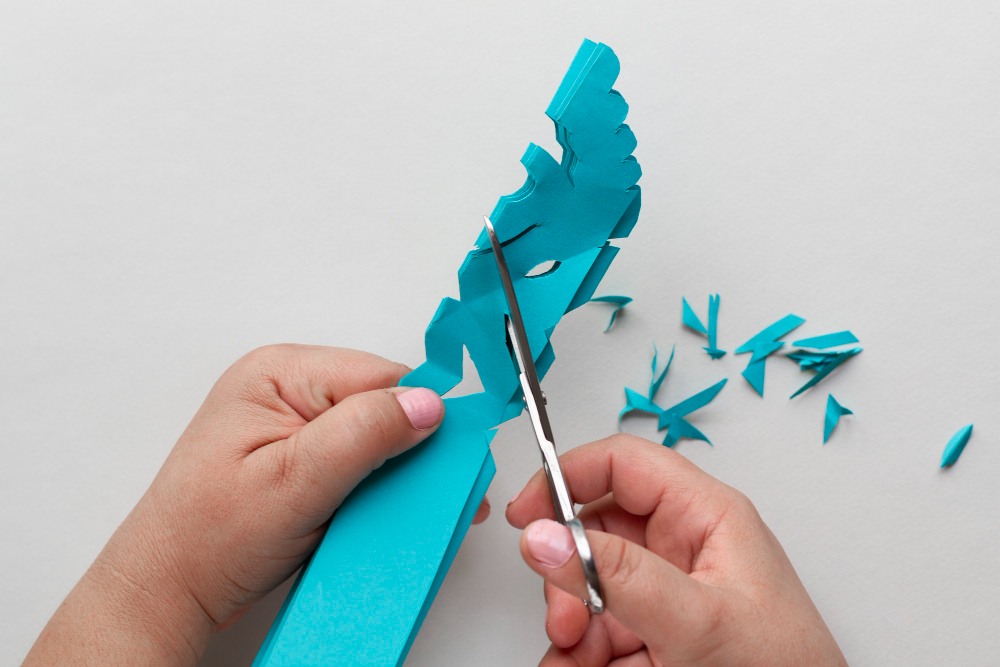
You walk into a beauty supply store. You ask to see a pair of shears. The salesperson hands them to you. You open a drawer, pull out a piece of paper, and snip. The paper cuts cleanly. You nod. You buy the shears. Two weeks later, you are back at your station wondering why your new shears feel clumsy, why they pull at the hair, why your wrist hurts at the end of the day.
The paper test is not enough. It never was.
Paper is uniform. Paper does not have moisture. Paper does not have variable thickness. Paper does not fight back. Paper tells you whether the shears are sharp. It tells you almost nothing about whether they are right for you. Evaluating shears before buying requires a more complete set of tests. These tests take five minutes. They can save you hundreds of dollars and years of wrist pain.
The first test is the hair test. Bring a small section of clean, dry human hair. Not synthetic. Not extensions. Real hair. Cut it with the shears. Listen. Feel. A good shear will cut through hair with minimal resistance. You should feel a clean separation, not a crush or a push. Look at the ends of the hair under good light. A sharp, well-aligned shear leaves a clean, dark line. A dull or misaligned shear leaves white dots, frayed edges, or angled cuts.
The second test is the slide test. Open the shears partially. Place a single strand of hair near the pivot. Close the shears slowly, letting the blade glide along the strand. The hair should slide smoothly toward the tip. If the hair catches, sticks, or tears, the blade has a nick, a burr, or a misalignment. This test reveals problems that the paper test will never show.
The third test is the sound test. Close the shears slowly near your ear. A high-quality shear will close with a soft whisper or a light “snikt.” There should be no clicking, grinding, scraping, or metallic ringing. Clicking means the blades are striking each other instead of gliding. Grinding means the pivot is dry or damaged. Listen carefully. The sound tells you what the blade cannot.
The fourth test is the balance test. Hold the shears in your cutting position. Close your eyes. Notice where the weight sits. Does the shear feel balanced between your thumb and fingers? Or does it feel heavy in the front or back? A well-balanced shear will feel like an extension of your hand. An unbalanced shear will fight you. You will feel it in your wrist before you finish your first cut.
The fifth test is the tension test. Open the shears about halfway. Hold them by the finger rest and let the thumb ring hang freely. Gently swing the shears. The blades should move smoothly without falling completely open or closed. If the blades swing too freely, the tension is too loose. If they do not move at all, the tension is too tight. Proper tension allows smooth movement without wobble. This test takes two seconds. Most stylists have never done it.
The sixth test is the fingertip test. Run your fingertip lightly along the cutting edge from the pivot to the tip. Do not press. You are not testing sharpness. You are testing for nicks. A nick feels like a tiny notch or catch on your skin. Even a microscopic nick will create drag and snagging. If you feel a nick, put the shears down. No amount of sharpening will fully remove a deep nick without changing the blade geometry.
The seventh test is the visual alignment test. Hold the shears up to a light. Look at the line where the two blades meet. You should see a thin, dark, continuous line from the pivot to the tip. If you see gaps, the blades are misaligned. If the line changes width, the blades are warped. If you see light passing through between the blades, put the shears down immediately. They will never cut correctly.
The eighth test is the comfort test. Hold the shears in your cutting position for thirty seconds. Do not cut. Just hold them. Notice the pressure points on your fingers. Does the thumb ring rub? Does the finger rest dig into your ring finger? Does the handle feel too small or too large? Comfort is not a luxury. It is a prerequisite. If the shears are not comfortable in your hand, you will not use them correctly. You will compensate with bad posture. Your body will pay the price.
The ninth test is the weight test. Compare the shears to a pair you already love. Are they significantly heavier? Significantly lighter? Weight affects fatigue. A heavier shear may feel more substantial, but it will tire your hand faster. A lighter shear may feel less durable, but your wrist will thank you at the end of a long day. There is no right answer. There is only what works for your hand.
The tenth test is the brand test. This is not about loyalty. It is about consistency. Brands that specialize in shears have quality control standards. Generic brands may have good days and bad days. Ask about the warranty. Ask about the return policy. Ask about sharpening services. A company that stands behind its product will answer these questions without hesitation. A company that hesitates is telling you something.
The paper test is a starting point, not a conclusion. It is the first word, not the last. The next time you buy shears, take five minutes. Run the full battery of tests. Your hands will thank you. Your wrist will thank you. And the shears you choose will serve you for years, not weeks. That is not just shopping. That is investing. And you are worth the investment.


