


Precision Cutting for Fine Hair: Creating Visual Density
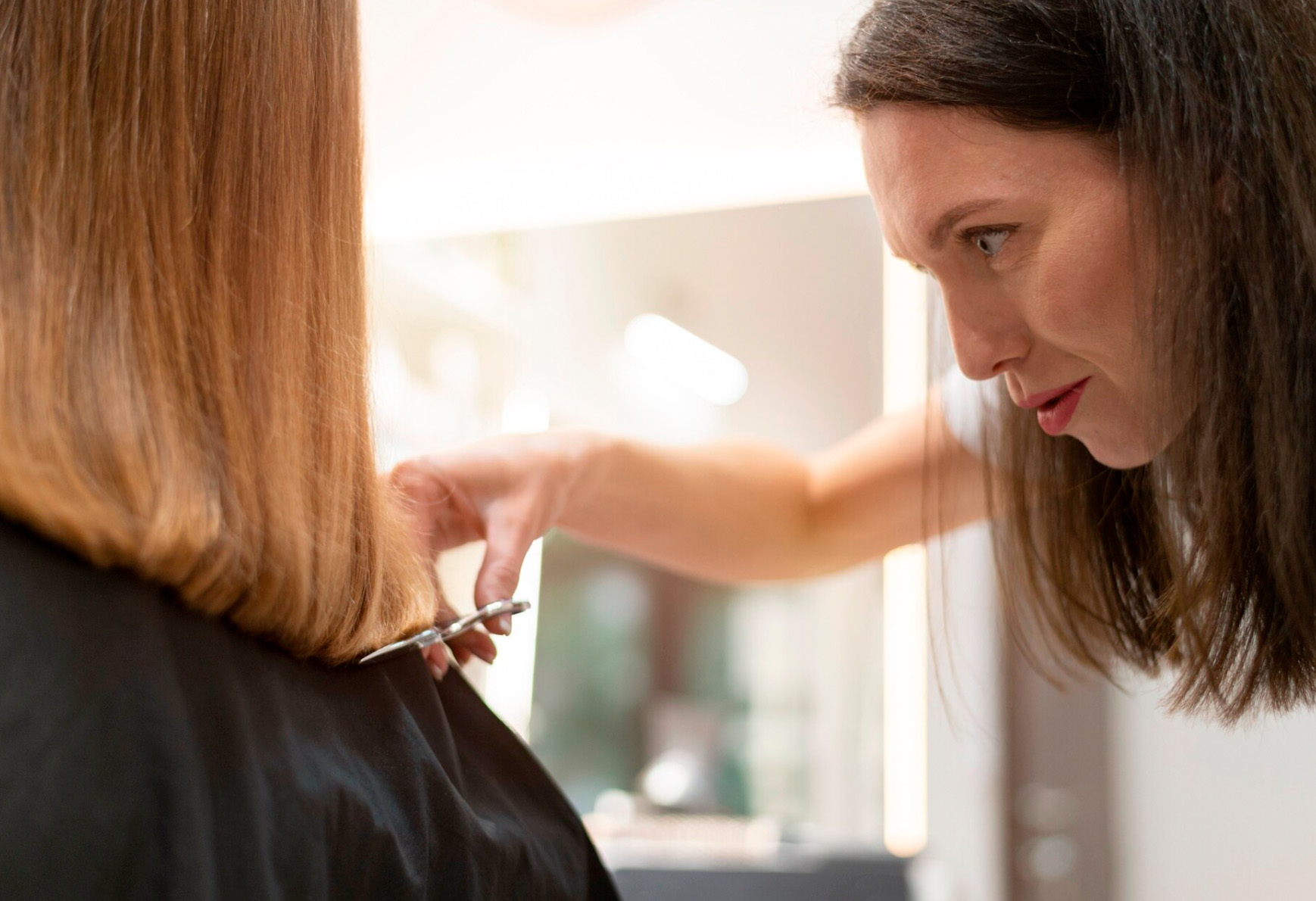
Fine, low-density hair presents distinct structural challenges in salon geometry. Because individual hair fibers have a narrow cortical diameter—often under 50 micrometers—and fewer follicles per square centimeter, traditional weight-removal techniques, aggressive layering, or heavy texturizing rapidly deplete the perimeter, leaving ends looking wispy, translucent, and collapsed.
Precision cutting for fine hair relies on controlled solid foundations, minimal elevation, and strategic over-direction to stack hair fibers cleanly on top of one another, maximizing light reflection and creating the optical illusion of thickness and structural mass.
1. Structural Biomechanics of Fine Hair Fibers
Understanding the physical limitations of fine hair dictates every geometric decision during the haircut:
Reduced Cortical Mass: Fine strands lack the thick cortical layer found in medium or coarse hair, resulting in lower tensile rigidity. Without adjacent strands for structural support, fine hair bends easily under gravity and lies flat against the scalp.
Perimeter Transparency: When fine hair is over-layered or razor-thinned, the distance between individual tips increases. Light passes directly through the ends, exposing the neck or shoulders and emphasizing low density.
Weight Stacking: By aligning hair ends along a unified horizontal or slightly graduated plane, thousands of fine tips converge at the exact same level, forming a dense, opaque visual barrier that appears significantly thicker.
2. Foundation Geometry: The Zero-Degree Solid Line
A solid, one-length baseline cut at zero degrees of elevation serves as the structural cornerstone for fine hair:
Gravity-Driven Alignment: Cutting hair in its natural fall without lifting it off the head ensures every strand travels the exact distance required to reach the perimeter line simultaneously.
Blunt Shear Execution: Using razor-sharp, convex-edge shears at a clean 90-degree perpendicular angle to the hair shaft creates a crisp, flat cut end. This maximizes surface area at the tip and prevents the frayed, tapered appearance caused by razors or thinning shears.
Controlled Head Position: Tilting the client’s head slightly forward when establishing the nape baseline creates a subtle, natural bevel underneath, encouraging the perimeter to curve inward smoothly rather than flipping outward.
3. Minimal Elevation and Over-Direction Strategies
When clients require movement or soft framing without sacrificing perimeter thickness, elevation and over-direction must be tightly restricted:
Low-Elevation Graduation (15 to 45 Degrees): Instead of lifting hair to 90 degrees or higher, apply subtle external graduation limited to the lower occipital or crown zones. Low elevation builds internal weight and gentle fullness just above the baseline while keeping the bottom edge completely intact.
Backward Over-Direction for Face Framing: Fine hair is naturally thinnest around the temporal and front hairline zones. To preserve front density, comb side sections backward toward the ear or stationary guide behind the ear before cutting. When released, the front lengths fall forward with maximum fullness intact.
Surface-Only Micro-Layering: If internal movement is necessary on longer lengths, isolate only the top crown section, elevate vertically, and cut cleanly without disturbing the parietal ridge or exterior perimeter.
4. Texturizing Contraindications and Finishing Protocols
Standard bulk-removal tools that work well on thick hair cause severe structural loss in fine hair:
Avoid Thinning Shears and Razors: Notched thinning shears remove internal support strands, causing the remaining hair to collapse flat against the head. Razors taper the cuticle at an oblique angle, creating translucent, wispy ends that tangle easily.
Micro-Point Cutting Only: If softening a harsh perimeter line is required, use shallow point cutting with the tips of the shears held nearly parallel to the hair shaft, cutting no deeper than 3 to 5 millimeters into the very ends.
Lightweight Polymer Support: During blow-drying, prepare damp hair with a lightweight volumetric mousse or root-lifting polymer spray, working upward at the root with a round brush while directing airflow down the cuticle shaft to seal shine and maximize optical fullness.


