


Tool Ergonomic and Blade Precision: How Edge Quality Impact Cuticle Integrity
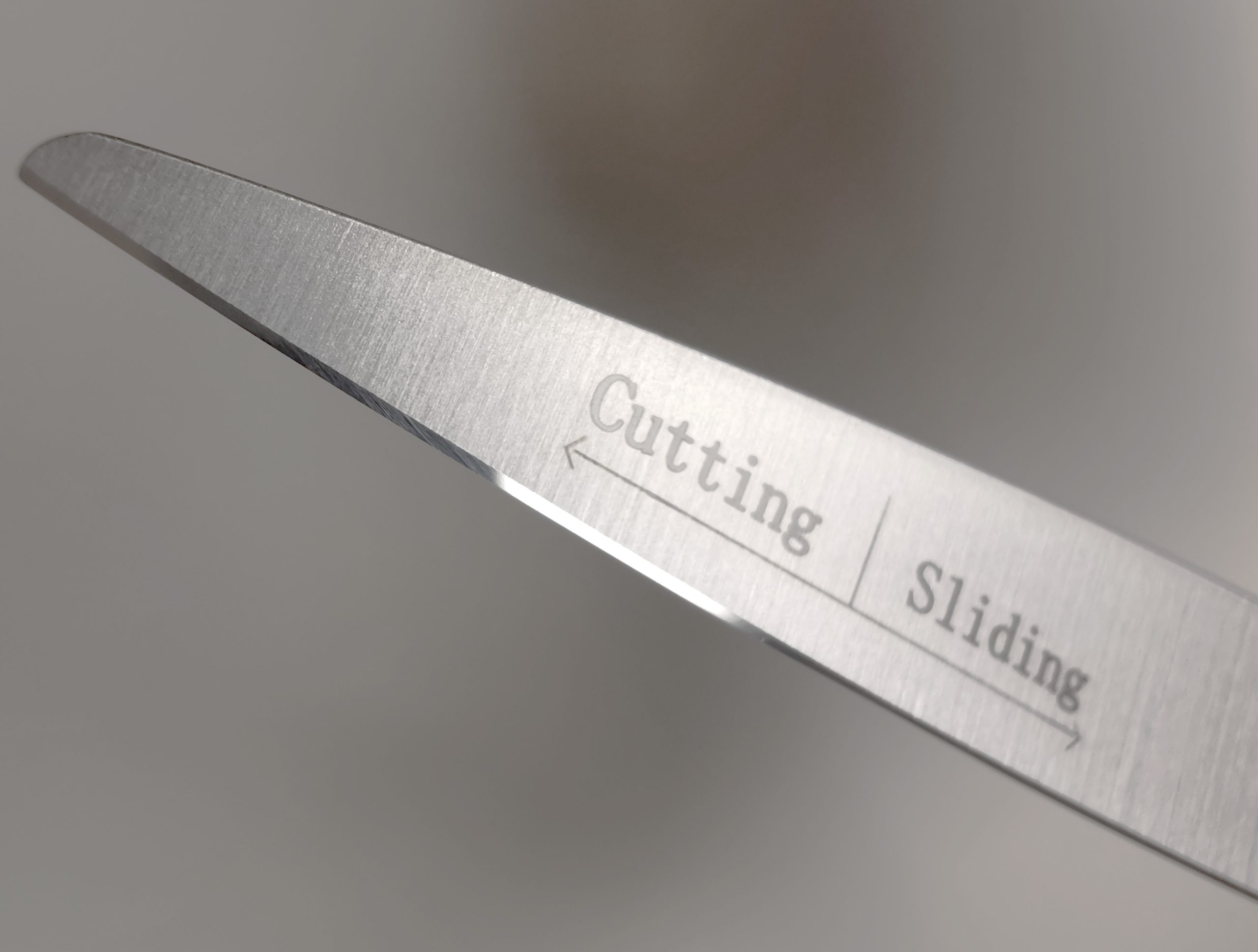
In high-end salon services, masterful technique requires the ultimate precision from cutting tools. While ergonomic scissor design is essential for protecting a stylist’s posture, wrists, and hands during long workdays, the sharpness and mechanical precision of the blade itself play a direct, decisive role in hair fiber health.
Using dull, misaligned, or degraded shears does far more than hinder a stylist’s workflow—it actively damages the microscopic structure of the hair cuticle.
The Micro-Biomechanics of a Hair Cut
At a microscopic level, cutting a hair strand should ideally function as a clean, effortless shear across the keratinized cortex.
Clean Shear (Sharp Blades): High-grade, convex-edge scissors slice seamlessly through the strand without resistance. The outer cuticle scales remain intact, flat, and sealed right up to the newly created tip.
Crushing & Friction (Dull Blades): When a blade loses its razor-sharp bevel or micro-honed edge, it no longer slices; it pinches, bends, and crushes the strand before forcing its way through.
This mechanical compression causes the outer cuticle scales to shatter, flare out, and split along the tip—creating microscopic fraying that is invisible to the naked eye but highly destructive to hair health.
Long-Term Cuticle Damage: From Frayed Tips to Split Ends
When hair cuticles are crushed by sub-par tools, the consequences become visible within weeks of the client leaving the chair:
Premature Split Ends (Trichoptilosis): The frayed, unsealed cortex created by a dull shear allows moisture loss and environmental friction to unravel the fiber, turning a fresh cut into split ends prematurely.
Loss of Surface Shine: Light reflects smoothly off clean, unbroken cuticles. Crushed and lifted tips cause diffuse light scattering, making the hair ends look dry, frizzy, and matte.
Increased Porosity & Tangling: Exposed inner cortex layers catch against neighboring strands, leading to chronic tangling and localized frizz along the perimeter line.
Professional Tool Care Protocols
To safeguard cuticle integrity and preserve tool performance, leading salons uphold strict maintenance practices:
Daily Cleaning & Lubrication: Removing residual hair, moisture, and chemical styling buildup from the pivot screw daily to prevent blade misalignment.
Tension Adjustment Checks: Maintaining precise blade tension—if the blades are too loose, hair bends and pushes; if too tight, the metal edges wear down unevenly.
Specialized Convex-Edge Sharpening: Partnering exclusively with certified master sharpeners who restore razor-sharp convex edges without altering the blade’s original radius or geometry.
Material Integrity: Utilizing high-purity Japanese 440C or Cobalt alloy steel shears, which hold an ultra-fine, corrosion-resistant edge significantly longer than standard stainless steel.


