


How to Use Thinning Shears to Add Texture Without Weakening the Hair
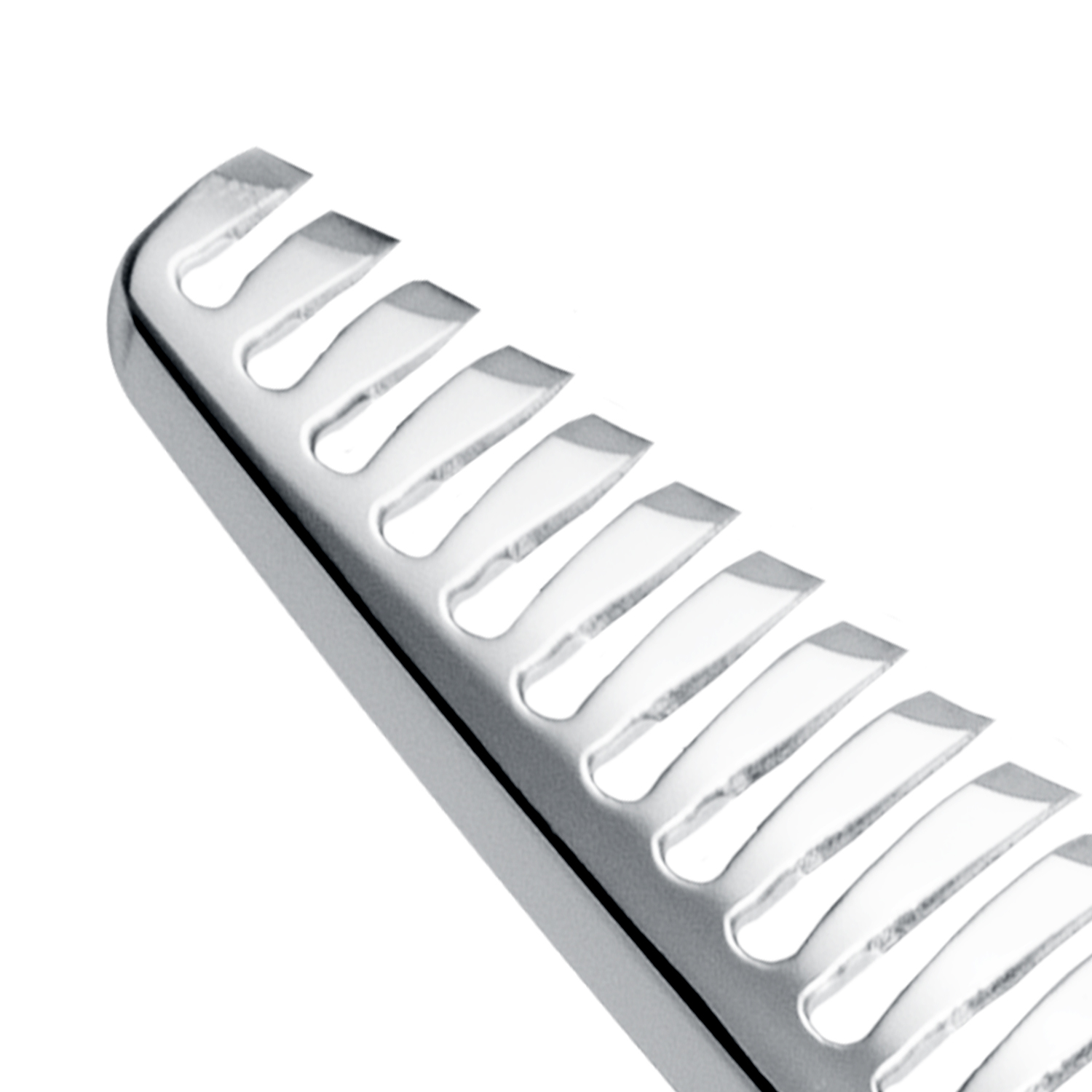
You reach for your thinning shears. You know they are powerful. You know they can remove bulk, blend lines, and create movement. But you also know they can be dangerous. Used incorrectly, they can leave visible lines, create holes in the hair, or weaken the density so much that the hair looks thin and damaged.
Thinning shears are not a shortcut. They are a precision tool. They require technique, intention, and restraint. The difference between a stylist who uses them well and a stylist who uses them poorly is not the tool. It is the approach.
The first thing to understand is that thinning shears remove hair. That is obvious. But what is less obvious is that they remove hair in a specific pattern. The teeth cut some hairs and leave others intact. This creates texture and reduces bulk without changing the overall length. When used correctly, the result is movement and lightness. When used incorrectly, the result is visible lines, uneven texture, and compromised density.
The second thing to understand is that not all thinning shears are the same. The number of teeth matters. Shears with more teeth (30 to 40) remove less hair per cut. They are gentler. They are ideal for fine hair or for finishing work. Shears with fewer teeth (16 to 24) remove more hair per cut. They are more aggressive. They are better for thick hair or for bulk removal. Choosing the right shear for the task is the first step to using them well.
The third thing to understand is that you should never close the shears completely. When you close thinning shears all the way, you cut a straight line across the hair. That line becomes visible as a gap or a hole. Instead, close the shears partially. Let the teeth do the work. The hair is cut, but the line is soft. The result is texture, not a line.
The fourth thing to understand is where to use thinning shears. They belong on the interior of the hair, not the perimeter. Cut into the mid-lengths. Remove weight from the crown. Soften the connection between layers. Never use thinning shears on the ends of the hair. That is where the perimeter lives. Cutting the perimeter with thinning shears creates a wispy, uneven edge that looks thin and damaged.
The fifth thing to understand is that thinning shears should be used in sections. Do not run them through the entire head in one motion. Work in small sections. One to two inches wide. Make two or three cuts per section. Lift the hair and cut into the mid-lengths. The result is subtle texture, not aggressive removal.
The sixth thing to understand is the direction of the cut. Cutting downward removes bulk from the interior. Cutting upward (toward the roots) creates lift and volume. The direction matters. If you want to remove weight, cut downward. If you want to create volume, cut upward. If you want both, alternate directions.
The seventh thing to understand is that thinning shears are not for every hair type. Fine hair cannot tolerate aggressive thinning. It will look sparse and damaged. Use thinning shears sparingly on fine hair. One or two cuts per section. Use a shear with more teeth. Thick hair can handle more aggressive thinning. It needs the weight removal. Use a shear with fewer teeth. Make more cuts per section.
The eighth thing to understand is that thinning shears do not replace good cutting technique. They are a finishing tool. Not a foundation. Cut the shape first. Establish the perimeter. Create the layers. Then use thinning shears to refine. If you use thinning shears to create the shape, you will end up with a shape that is uneven and weak.
The ninth thing to understand is that you should check your work constantly. After every few cuts, release the section and look at it. Is the texture even? Are there visible lines? Is the hair lying smoothly? If you see a line, go back and soften it with one or two more cuts. If you see a hole, you have cut too much. There is no way to put the hair back. Learn from the mistake and cut less next time.
The tenth thing to understand is that less is almost always more. The stylist who uses thinning shears aggressively is often the stylist who is trying to fix a problem that should have been fixed with a better haircut. Thinning shears are not a solution. They are a refinement. Use them sparingly. Use them intentionally. Use them with respect for the hair.
Thinning shears are a gift to the hairstylist. They can transform a heavy haircut into a light one. They can turn a blunt shape into a textured one. They can create movement and volume in ways that nothing else can. But they are also a weapon. They can destroy density. They can create holes. They can leave visible lines that haunt the client for weeks. The difference is not the tool. The difference is the hand that holds it. Hold it with care. Hold it with intention. Hold it with the knowledge that you are not just cutting hair. You are shaping confidence. And confidence deserves respect.


