


One Pair Cannot Do Every Cut
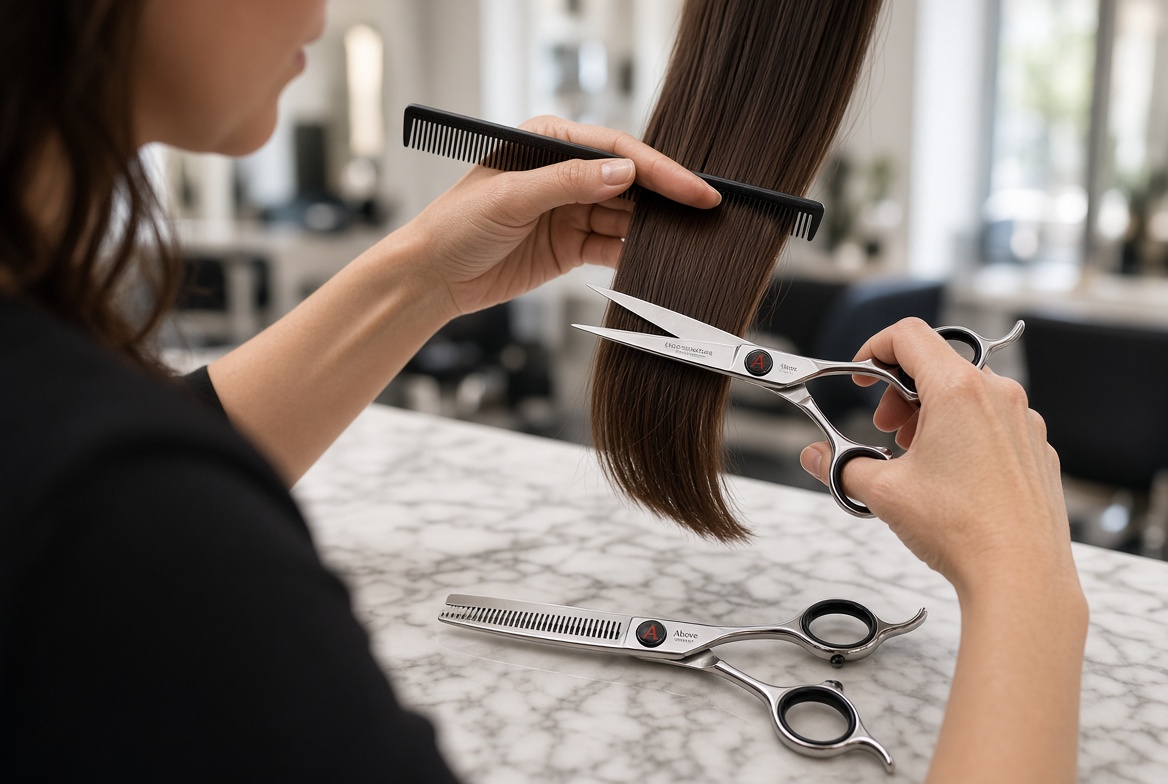
A single pair of shears can open and close all day. That does not mean it should perform every motion. Cutting a clean line, removing interior weight, and softening a perimeter are different mechanical jobs. When one blade is asked to do all three, the haircut loses structure and the tool loses its edge faster than the stylist expects.
Professional cutting is a system. The cutter creates the shape. The blender or texturizer edits density. Using the wrong tool for either task does not look like a small compromise. It looks like holes, shelves, frayed ends, or a shape that collapses as it grows.
What a cutter is for
A cutting shear is built to meet hair and separate it. The edge should enter the section and leave a decided end. That is the tool for:
- perimeter lines
- one-length shapes
- guided layers
- point cutting when the intention is still a controlled end
- dry refinement of a line that must remain intact
A cutter is not a bulk-removal tool. Opening and closing it repeatedly through thick interior sections in order to “thin” the hair is a misuse of the edge. The blade begins to push. The section bends. The ends look chewed. The stylist then adds more cuts to correct the first mistake.
If the haircut needs less weight, the answer is not a tired cutter forced into a blending motion. The answer is a tool designed to remove a measured amount of hair.
What a blender or texturizer is for
A thinning or texturizing shear does not exist to decorate the finish. It exists to change density without destroying the line the cutter already established.
Tooth count matters. A shear with fewer, wider teeth generally removes more hair per pass. A shear with more, finer teeth generally removes less and leaves a softer interruption. That is why a 28-tooth tool and a 35-tooth tool are not interchangeable, even when both are called “thinners.”
Use a blender or texturizer when the goal is to:
- reduce bulk in thick or heavy hair
- soften a weight line without moving the perimeter
- add interior movement after the shape is already correct
- keep a short cut from sitting like a helmet
- refine growth patterns that the cutter cannot safely chase
Do not use it to find the haircut. If the shape is wrong, blending will not hide it. It will make the error harder to rebuild.
Why one pair fails both jobs
The failure is mechanical before it is stylistic.
A convex cutting edge is sharpened to slice. Dragging that edge sideways through dry interior hair, or chewing through bulk with repeated closing, rounds the bevel and invites micro-push. The next perimeter cut is no longer clean, even if the stylist’s technique has not changed.
A toothed shear, used as a primary cutter, leaves interrupted ends where a solid line was required. The client sees texture. The stylist sees a line that will not grow out evenly. On fine hair, one aggressive pass can create visible gaps that only time or a corrective cut will close.
There is also a body cost. A cutter forced through heavy sections requires more closing force. That force travels into the thumb, wrist, and shoulder. A dedicated blender removes weight with less effort because that is the work it was patterned to do.
One pair used for everything becomes a mediocre cutter and a dangerous blender.
Build the kit around the day, not around the drawer
A working kit does not need ten shears. It needs roles.
The cutter should stay reserved for lines and structure. Keep its tension correct. Keep its edge for the moments when the haircut must look decided.
The blender or texturizer should come out after the shape is set, or in planned interior work where density is the problem. Choose tooth count by how much hair must leave the section, not by which pair is already in the hand.
A second cutter can be justified if the day includes both wet structural work and dry finishing. It is not required on day one. A cutter plus one well-chosen blender will correct more haircuts than three cutters and no blending tool.
For barbers and stylists who cut both salon shapes and tighter men’s work, the same rule holds. The short perimeter still needs a true cut. The interior still needs a controlled reduction. Switching tools is part of the haircut, not an interruption of it.
How to decide in the chair
Ask what the section needs before the blade enters it.
If the section must become shorter and the end must remain solid, use the cutter.
If the section is already the right length and feels too dense, use the blender.
If the line is wrong, recut the line. Do not texturize a mistake.
On fine or thinning hair, default to the cutter and use the toothed shear sparingly, if at all. On coarse or heavy hair, plan blending as a step, not as an afterthought when the arms are tired.
Watch the ends. A clean cut leaves an even, dark-looking tip. A crushed or over-texturized end looks pale, ragged, or inconsistently short. That is the client’s grow-out. It is also the record of which tool was used.
Care follows function
Separate the jobs in maintenance as well. A cutter that has been used to hack through bulk will need attention sooner. A blender that has struck foil, pins, or a comb tooth can damage the opposing blade and then damage hair.
Clean both. Oil the pivot on both. Do not assume that because the toothed shear “is not the main pair,” it can wait. A damaged blender leaves holes. A dull cutter leaves frizz. Each failure shows in a different place on the same head.
The professional standard
Versatility is not one tool doing every motion. Versatility is knowing which motion the haircut requires and having the correct edge ready.
Keep the cutter for the shape. Keep the blender for the density. Switch with intention. The haircut will last longer, the ends will look finished, and the primary shear will still cut like a primary shear at the end of the week. That is the difference between owning shears and working with a kit.


