


Shear Ergonomics and Alloys: Choosing the Right Tool for Every Cutting Technique
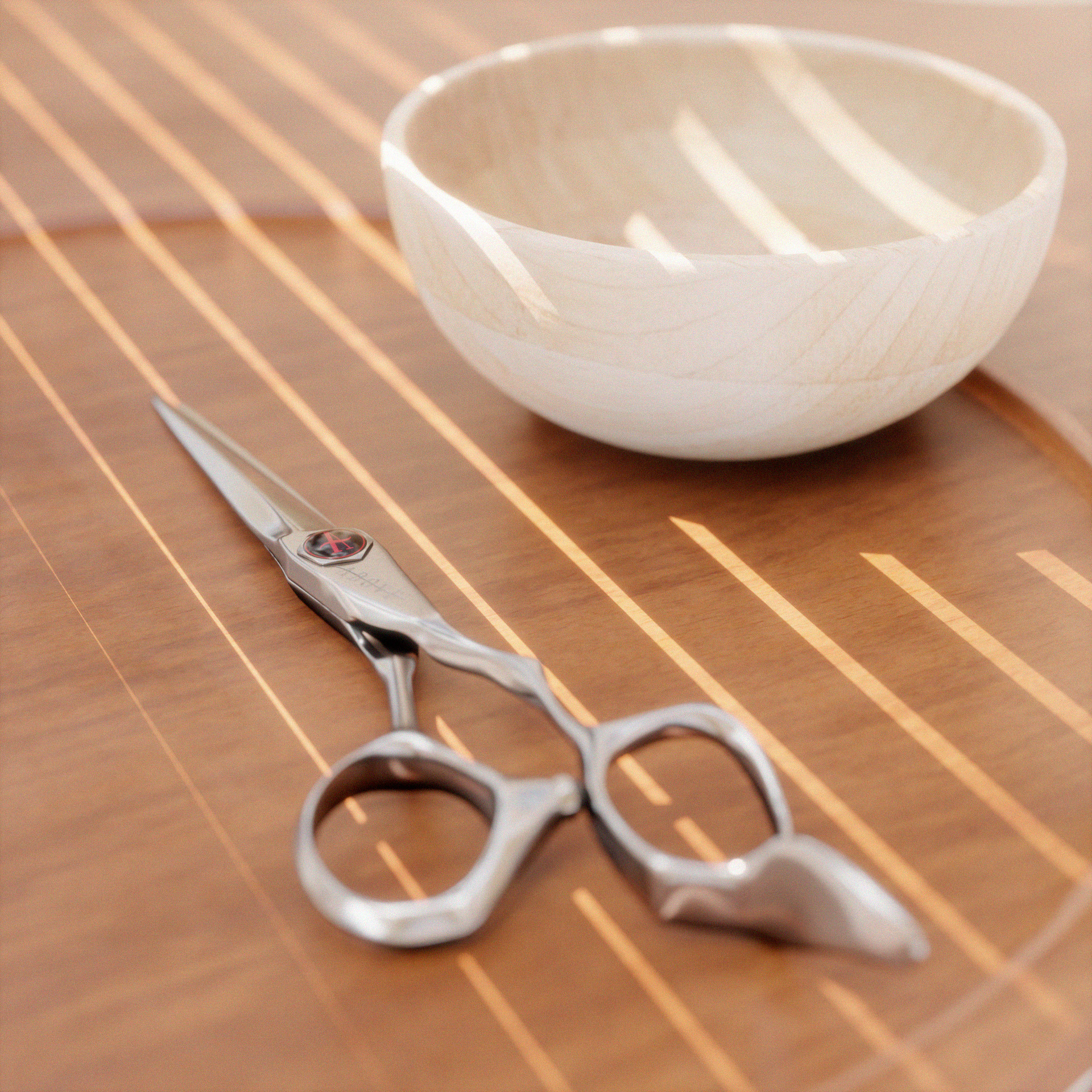
For a professional hair stylist, shears are more than just a cutting tool—they are an extension of the hand. Spending six to eight hours a day executing precision cuts, point cutting, and slide blending puts immense strain on a stylist’s fingers, wrist, and shoulder.
Selecting the right shears is not only a matter of personal comfort; it directly impacts cut precision, tool durability, and long-term joint health. Understanding how handle design and steel alloys interact with specific cutting techniques allows stylists to protect their bodies while elevating their craft.
Here is a guide to helping stylists evaluate shears based on ergonomics, metallurgy, and cutting style.
Ergonomic Handle Designs: Protecting the Stylist
Repetitive Strain Injury (RSI) and Carpal Tunnel Syndrome are two of the most common career-ending conditions for hair professionals. The shape of a shear’s handle determines the position of the thumb and wrist during execution.
Opposite (Classic) Handles:
Design: Symmetrical handles where the finger and thumb rings align directly across from each other.
Best For: Short, quick cutting sessions or blunt perimeter cutting where the thumb does not need to drop lower.
Impact: Requires raising the elbow and bending the wrist, which can increase strain over long appointments.
Offset Handles:
Design: The thumb ring is noticeably shorter than the finger ring, relaxing the thumb position.
Best For: General cutting, blunt lines, and all-day salon use.
Impact: Reduces thumb travel and keeps the hand in a more natural, relaxed posture.
Crane (Swivel) Handles:
Design: An angled or rotating thumb ring that allows 360-degree mobility.
Best For: Slide cutting, point cutting, and stylists dealing with wrist or joint discomfort.
Impact: Keeps the elbow lower and the wrist straight, significantly reducing shoulder tension and hand fatigue.
Steel Alloys and Metallurgy: Durability vs. Precision
The quality of steel dictates how sharp a blade can be ground, how long it retains its edge, and how it handles different hair textures.
Japanese Stainless Steel (440C):
Characteristics: High corrosion resistance and excellent hardness.
Best For: Standard daily salon work, wet cutting, and solid baseline value.
VG-10 Steel (Cobalt Alloy):
Characteristics: Infused with cobalt and carbon for superior edge sharpness and wear resistance.
Best For: Dry cutting, dense hair types, and high-volume stylists needing long-lasting sharpness.
Damascus and Powder Metallurgy Steel:
Characteristics: Layered, high-density steel that provides extreme edge retention and ultra-smooth cutting action.
Best For: Master stylists specializing in delicate texturizing, slide cutting, and precision geometric work.
Blade Edges and Cutting Techniques
Matching blade geometry to cutting style is essential for achieving clean lines without pushing or pulling the hair.
Convex Edge (Japanese Style):
Features: Ultra-sharp, razor-like edge with a smooth outer curve.
Ideal Techniques: Slide cutting, texturizing, and seamless layering.
Considerations: Extremely sharp and smooth, but requires careful handling and professional sharpening.
Beveled Edge (German Style):
Features: Flat, angled edge that provides high stability and durability.
Ideal Techniques: Precise blunt cutting, club cutting, and scissor-over-comb work.
Considerations: Highly durable and holds an edge well on dry or coarse hair, preventing hair from pushing off the blade.
Micro-Serrated Blades:
Features: Tiny laser-cut grooves along one blade edge to hold hair in place.
Ideal Techniques: Precise geometric cuts, beginner training, and crisp baseline perimeter cutting.
Matching the Shears to the Service
To maximize efficiency and comfort, stylists should maintain a core set of specialized tools:
5.0 to 5.5 inch shears: Ideal for detail work, fringe trimming, and precise geometric lines around the ears and neck.
6.0 to 6.5 inch shears: The all-around standard for general sectioning, wet cutting, and slide techniques.
7.0 inch shears: Perfect for scissor-over-comb work and handling large sections of thick or coarse hair quickly.
Investing in Health and Craftsmanship
Choosing professional shears is a dual investment in artistic control and physical well-being. By pairing high-grade alloys with ergonomic handle designs tailored to specific techniques, stylists can deliver flawless cuts while protecting their hands for a long, healthy career.


