


Tribology of Cutting Shears
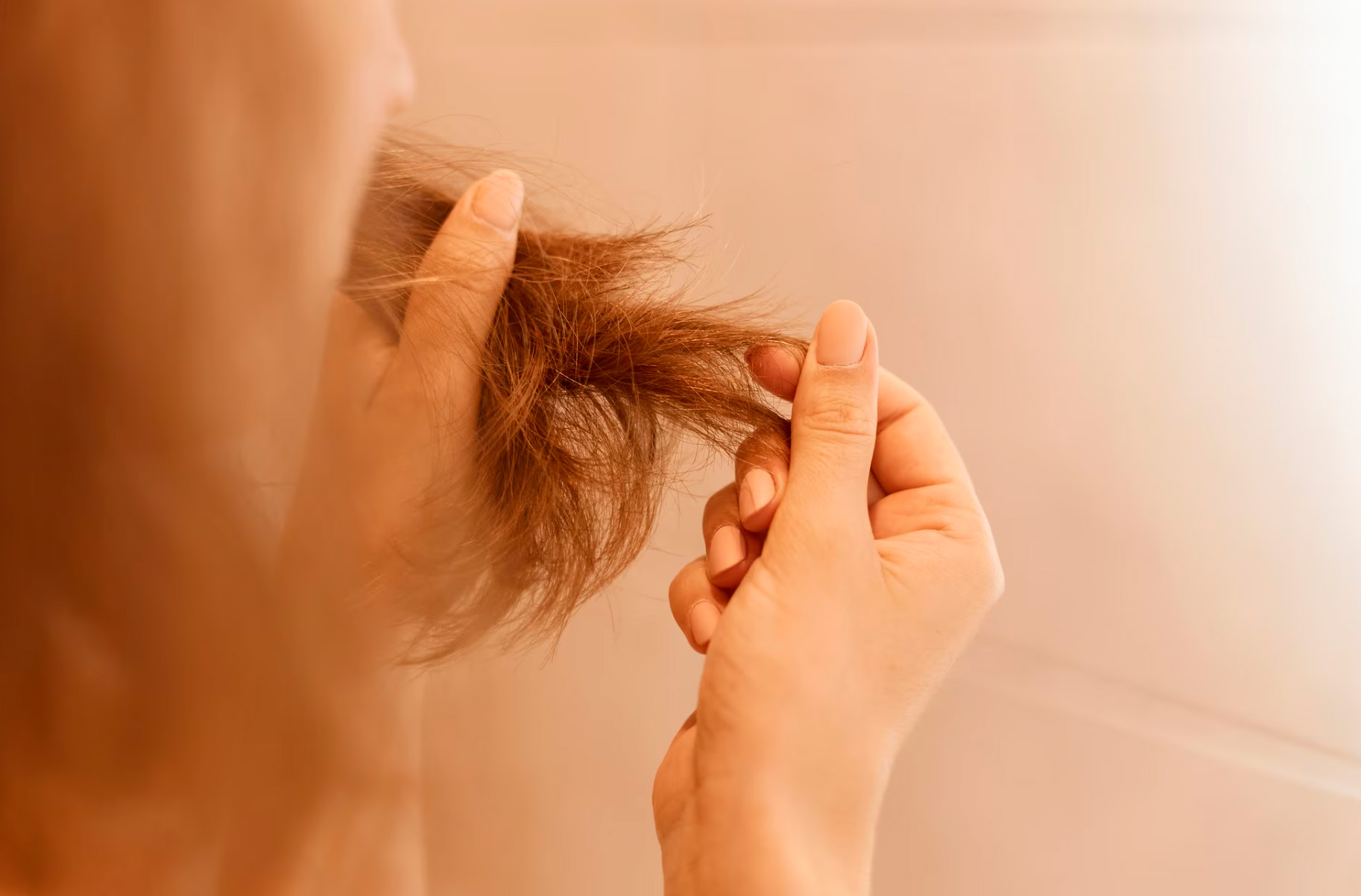
Blade Edge Geometry (Convex vs. Beveled) and Its Impact on Cuticular Micro-Deformation
In professional hairdressing, cutting hair is often discussed in terms of shape, sectioning, and elevation. However, at a microscopic level, every stroke of a scissor is a precise biomechanical operation: the mechanical shearing of a complex protein fiber. The branch of physics that studies interacting surfaces in relative motion—including friction, lubrication, and wear—is known as tribology.
Applying tribological principles to hair cutting reveals that the geometry of a shear blade directly dictates whether hair fibers are cleanly sliced or mechanically crushed. Understanding the differences between convex (Japanese style) and beveled (German style) edge geometries, along with the influence of hollow grinding, allows stylists to protect the cuticle layer and prevent long-term fiber structural failure.
1. The Physics of Mechanical Shearing on Keratin Fibers
Hair is a composite material consisting of a protective outer cuticle, a fibrous cortical matrix, and occasionally a central medulla. When a shear blade closes around a section of hair, it exerts two primary forces on the fiber:
Compressive Force: The physical squeezing of the hair shaft between the upper and lower blades prior to penetration.
Shear Stress: The lateral mechanical force required to exceed the ultimate tensile strength of keratin and sever the strand.
If the edge angle of the blade is too dull or steep, the compressive force exceeds the shear force. Instead of slicing smoothly through the cuticle scales, the blades mash and flatten the shaft before cutting it, causing microscopic structural destruction known as cuticular micro-deformation.
2. Blade Edge Geometry: Convex vs. Beveled Systems
The shape and angle of a shear’s cutting edge determine how force is distributed across the hair strand.
Convex Edge Geometry (Japanese Style)
Convex blades feature a smooth, outward curve on the outer face that tapers down to an extremely acute edge angle (typically between 40 and 45 degrees).
Hollow Grinding (Concave Inner Ride Line): The inner face of a high-end convex shear is hollowed out (hollow ground). This reduces the contact surface area between the two blades to a microscopic ride line, drastically minimizing metal-to-metal friction.
Mechanism: The razor-sharp, narrow edge angle slices through the hair with minimal resistance. The blade acts like a scalpel rather than a wedge.
Performance: Ideal for dry cutting, slide cutting, channel cutting, and precision texturizing, as the smooth outer curve allows the blades to glide along the hair without snagging or pulling.
Beveled Edge Geometry (German/Western Style)
Beveled blades feature a flat, angled edge ground directly into the outer face of the blade, resulting in a steeper edge angle (typically between 50 and 60 degrees).
Flat Contact Surface: Unlike convex blades, beveled blades have a flat outer bevel that creates a firm, rigid cutting surface.
Mechanism: The steeper angle requires greater mechanical force to slice the hair. As the blades close, the flat edge acts as a micro-wedge, slightly pushing and compressing the hair shaft before the cut is finalized.
Performance: Highly durable and resistant to nicking. Beveled blades—especially those with micro-serrations on one edge—are excellent for blunt cutting straight perimeter lines on wet hair, as the serrations trap the hair and prevent it from pushing forward along the blade.
3. Micro-Deformation of the Cuticle and Cortex
The microscopic condition of the cut tip after a haircut has a lasting impact on hair health and style longevity.
High Compression Damage (Dull or High-Angle Beveled Edges)
When hair is severed using steep edge angles or uncalibrated shears, the compressive force deforms the cuticle layer:
Cuticle Fracture and Peeling: The overlapping cuticle scales are squeezed, causing the epicuticle to crack and delaminate from the cortex at the cut point.
Cortical Splitting: The internal cortex is flattened and crushed. The exposed cortical cells lose structural coherence, creating a frayed end reminiscent of a crushed rope.
Long-Term Consequences: Frayed ends increase water evaporation from the cortex, leading to premature split ends (trichoptilosis), localized frizz along perimeter lines, and loss of reflection.
Clean Shear Slicing (Sharp Convex Edges)
When hair is severed using an acute convex edge with hollow-ground inner alignment:
Intact Cuticular Margin: The cuticle scales remain flat and firmly attached right up to the exact point of the cut line.
Clean Cross-Section: The cortex and medulla are sliced cleanly without crushing, maintaining their circular or elliptical cross-sectional geometry.
Long-Term Consequences: Sealed ends retain internal moisture, resist split-end formation, and maintain a polished appearance far longer between salon visits.
4. Practical Protocols for the Styling Station
To maximize shear performance and protect fiber integrity, apply these technical guidelines:
Reserve Convex Shears for Slide and Dry Techniques: Never execute slide cutting or slicing with a beveled or micro-serrated shear. The steep edge angle will scrape and strip the cuticle layer down the shaft. Always use sharp convex shears for freehand sliding.
Match Blade Type to Fiber State: Wet hair has lower shear resistance due to water lubrication breaking hydrogen bonds, making it suitable for both beveled and convex cutting. Dry hair offers much higher resistance; always use acute convex shears on dry hair to avoid cuticular crushing.
Calibrate Shear Tension Daily: Loose tension allows the blades to separate slightly during the cut, forcing hair to bend and tear between the blades rather than shear. Tighten tension so the top blade stops smoothly at a 45-degree angle when dropped.


