Posted on — Leave a comment

What Stylists Look for Before Picking Up the Scissors

What Stylists Look for Before Picking Up the Scissors
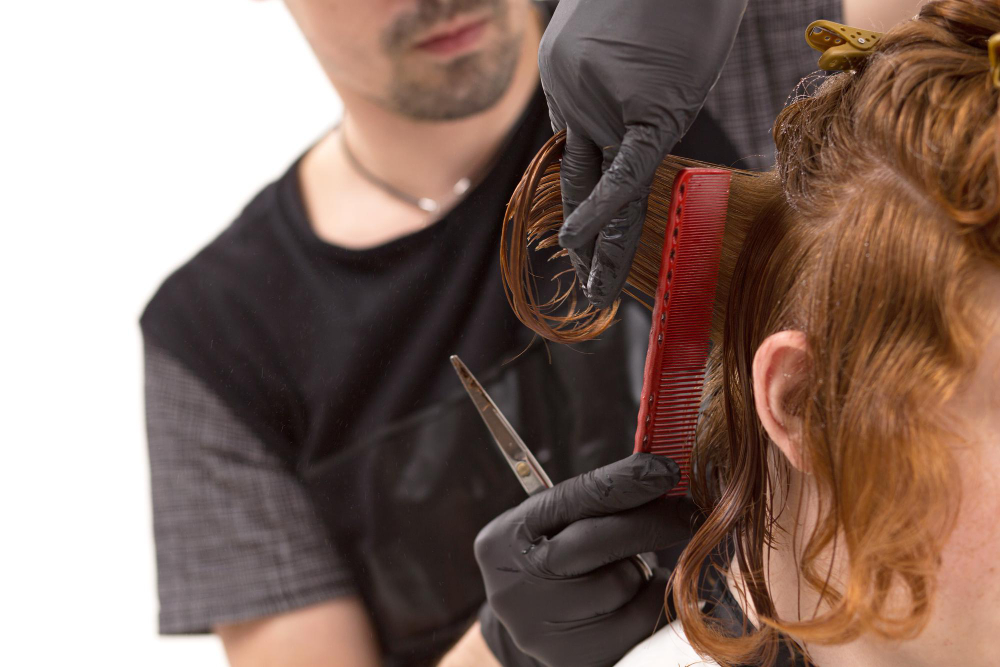
A haircut doesn’t begin with the first snip. Before any scissors touch the hair, professional stylists take time to evaluate several important factors that influence how the haircut should be approached. These observations help determine the most suitable shape, technique, and structure for the final result.
A thoughtful evaluation ensures that the haircut works not only in the salon chair, but also in everyday life once the client leaves.
Understanding the Client’s Goals
The first step is understanding what the client wants to achieve. This goes beyond simply identifying a style or length. Stylists often ask questions about:
• Daily styling habits
• Time available for hair care
• Comfort with styling tools
• Desired level of maintenance
A haircut that looks good in a photo may not be practical if the client prefers low-maintenance styling. Understanding expectations helps the stylist design a cut that fits the client’s lifestyle.
Examining Hair Texture and Density
Hair texture plays a major role in how a haircut will behave. Straight, wavy, curly, and coily hair all respond differently to cutting techniques.
Stylists typically evaluate:
• Texture (fine, medium, or coarse)
• Density (how much hair is present on the scalp)
• Natural movement or wave pattern
Fine hair may require techniques that maintain fullness, while thicker hair may need controlled weight removal to create balance.
Observing Natural Growth Patterns
Hair does not grow in the same direction everywhere on the head. Areas such as the crown, hairline, and nape often have strong growth patterns that influence how the hair falls.
Stylists look for:
• Cowlicks
• Swirls at the crown
• Irregular growth around the hairline
• Natural parting patterns
Ignoring these patterns can cause a haircut to behave unpredictably once the hair dries or grows out.

Evaluating Head Shape and Proportions
The shape of the head affects how a haircut appears from different angles. Stylists consider the overall proportions of the client’s head and face before choosing the structure of the cut.
This evaluation helps determine:
• Where volume should be added or reduced
• How layers should be positioned
• Where the length should fall to create balance
These decisions help create a haircut that complements the individual rather than simply copying a style.
Checking the Condition of the Hair
Hair condition can influence which cutting techniques are appropriate. Damaged or heavily processed hair may require more conservative approaches to prevent further breakage.
Stylists often examine:
• Split ends
• Chemical processing
• Previous haircut structure
• Areas of fragility or dryness
This allows them to adapt the haircut so the hair remains healthy and manageable.
Planning the Cutting Strategy
After observing all these factors, the stylist develops a plan for the haircut. This includes decisions about:
• Sectioning patterns
• Cutting angles
• Layer placement
• Weight distribution
This planning stage is what separates a thoughtful haircut from one that is rushed or improvised.
Why This Step Matters
Taking time to analyze the hair before cutting helps ensure that the result is balanced, functional, and suited to the individual. A haircut should work with the hair’s natural characteristics rather than against them.
For professional stylists, the process of observing and planning is just as important as the cutting itself. By understanding the hair before the scissors are used, stylists can create results that remain wearable and manageable long after the salon visit.

Posted on — Leave a comment

Mapping the Haircut Before Cutting: The Rise of Structural Planning

In modern haircutting, successful results increasingly rely on planning before the first cut is made. Structural planning, or “mapping” the haircut, allows stylists to visualize the desired shape, movement, and weight distribution in advance. By taking the time to map the haircut, stylists reduce guesswork, increase precision, and ensure consistency from consultation to final finish.
________________________________________
What Haircut Mapping Involves
Mapping a haircut goes beyond sketching or mentally visualizing the shape. It involves strategic assessment and planning of:
• Sectioning patterns: Determining which sections will be cut first and in what order to maintain control over the shape.
• Elevation and angles: Planning how each section will be elevated to create layers, graduation, or texture.
• Weight distribution: Identifying where to preserve or remove bulk to maintain balance and flow.
• Growth patterns: Taking into account cowlicks, natural partings, and the way the hair falls to predict the finished look.
This process allows the stylist to anticipate potential challenges, avoid mistakes, and execute the cut efficiently.
________________________________________
Why Mapping Enhances Technical Precision
Cutting without a plan can lead to:
• Uneven layers or inconsistent lengths
• Unintended bulk or flat spots
• Overcutting in certain areas
• Time-consuming corrections
Mapping transforms the haircut into a step-by-step blueprint. Stylists can determine which sections will set the foundation, how graduation or layering will progress, and where texture should be introduced for movement.
For example, in a graduated bob, mapping helps the stylist decide:
• Where the shortest perimeter points will sit
• How much internal weight should be maintained for balance
• Which angles produce smooth graduation versus bold geometric lines
With this pre-cut planning, every action contributes intentionally to the final shape.
________________________________________
Integrating Mapping into Daily Practice
Structural planning can be incorporated into any service without slowing down workflow. Key strategies include:
• Section diagrams: Drawing or visualizing the plan before cutting, especially for complex shapes
• Reference points: Using natural landmarks such as ears, jawline, or shoulder line for consistent measurements
• Checkpoints: Pausing during the cut to compare progress with the planned structure
• Adaptation: Adjusting the plan as needed for hair texture, density, or client-specific requests
This approach encourages a disciplined, analytical method that enhances both efficiency and outcome quality.
________________________________________
The Professional Advantage
Stylists who prioritize mapping before cutting gain:
• Greater confidence in executing complex shapes
• Reduced risk of errors or overcutting
• More predictable results that align with client expectations
• A foundation for teaching or scaling advanced techniques in the salon
Structural planning is no longer an optional step—it is a defining characteristic of modern, professional haircutting. By mapping the haircut before touching the scissors, stylists ensure that every cut has purpose, direction, and precision.

Posted on — Leave a comment

Mastering Layering for Volume and Movement

Layering is one of the most powerful tools in haircut design, yet it is often reduced to a formula rather than treated as a structural skill. True mastery of layering is not about removing length indiscriminately, but about controlling weight, direction, and movement so the haircut performs consistently in real-world wear.
When executed with intention, layering creates volume and flow without compromising shape or longevity.

Understanding Layering as Weight Distribution
At its core, layering determines where weight is held and where it is released. Every elevation choice, cutting angle, and sectioning pattern influences how the hair collapses and expands.
Effective layering considers:
• Head shape and natural fall
• Density variations across the scalp
• How the perimeter supports or restricts movement
Volume is not added—it is revealed through strategic weight removal.

Choosing the Right Layering Strategy
Not all layering produces movement, and not all movement requires visible layers. Different strategies serve different design goals.
Common layering approaches include:
• Graduated layering for controlled volume and structure
• Uniform layering for balanced movement throughout the shape
• Long layering to maintain perimeter strength while adding flow
Selecting the right approach ensures movement supports the haircut rather than destabilizing it.

Elevation and Overdirection Matter More Than Length
Many layering issues stem from inconsistent elevation and overdirection. Even subtle deviations can shift weight distribution dramatically.
Precision in layering requires:
• Consistent elevation relative to head shape
• Intentional overdirection to preserve or remove weight
• Awareness of how sections interact when released
Movement becomes predictable when these variables are controlled.

Layering and Texture Are Not the Same
Layering establishes structure; texturizing refines it. Confusing the two often leads to weakened shapes and uneven performance.
Layering should:
• Create the foundation for volume and flow
• Define how the haircut expands and collapses
Texture should:
• Soften edges
• Enhance visual movement without altering structure
Separating these roles preserves integrity and longevity.

Designing Layering for Everyday Wear
A technically sound layered haircut must perform beyond the chair. Movement should appear natural in both styled and unstylized states.
This requires considering:
• How the hair settles after washing
• How natural parting influences balance
• How growth impacts shape over time
Layering that looks controlled only when styled lacks true functionality.

Layering as a Signature Skill
Mastering layering elevates cutting from technique to design. It allows stylists to adapt shapes to different densities, textures, and lifestyles without relying on trend-driven shortcuts.
When layering is approached with intention, volume and movement become consistent outcomes—not accidental ones.

Posted on — Leave a comment

Why Cutting Precision Matters More as Styling Becomes Minimal

As styling routines become simpler, the haircut itself carries more responsibility for the final result. With fewer tools, products, and finishing techniques used daily, any imbalance or inaccuracy in the cut becomes immediately visible. This shift has increased the importance of cutting precision across all hair lengths and textures.

Reduced Styling Exposes Structural Flaws

When hair is heavily styled, minor cutting inconsistencies can be disguised. Minimal styling removes that buffer. Common issues that become noticeable include:

  • Uneven weight distribution
  • Inconsistent length through the perimeter
  • Poor internal balance
  • Sections that collapse or expand unpredictably

Precision ensures the haircut performs without relying on external correction.

Haircuts Must Function in Their Natural State

Modern haircut design increasingly accounts for how hair behaves when air-dried or lightly finished. Precision allows the cut to settle correctly without manipulation. This requires:

  • Accurate sectioning aligned with natural fall
  • Consistent elevation and tension control
  • Clean perimeter work
  • Intentional internal structure

Each choice affects how the hair sits on its own.

Precision Supports Shape Longevity

Cuts that lack precision tend to lose shape quickly as hair grows. Minimal styling makes this breakdown more apparent. Precise cutting helps:

  • Maintain balance as length increases
  • Prevent perimeter distortion
  • Preserve internal support
  • Reduce the need for frequent reshaping

This aligns with longer maintenance cycles.

Texture Becomes More Visible Without Heavy Finishing

When styling is minimal, texture is no longer masked. Precision allows texture to be managed rather than hidden. Stylists are focusing on:

  • Preserving natural movement
  • Controlling density without thinning
  • Avoiding over-texturizing
  • Allowing texture to sit evenly

This improves consistency across wash-and-wear styling.

Client Expectations Have Shifted

Clients increasingly expect haircuts to look intentional without effort. Precision supports this expectation by reducing dependence on daily styling. This includes:

  • Predictable results day to day
  • Fewer styling steps at home
  • Better performance between appointments

Precision becomes part of the service value.

Training and Skill Development

As minimal styling becomes standard, cutting education emphasizes accuracy over speed. Stylists are refining:

  • Section control
  • Visual balance assessment
  • Tension and elevation discipline
  • Finishing checks without heavy styling

These skills improve reliability.

Professional Benefits

Precision reduces corrective work, improves retention, and builds trust. When haircuts perform well without styling, confidence in the stylist’s technical ability increases.

As styling becomes minimal, cutting precision is no longer optional. It is the foundation that allows haircuts to function, wear well, and meet modern expectations.

Posted on — Leave a comment

Designing Brunette Colour Services With Subtle Warmth and Depth

Brunette services have shifted away from flat, uniform results toward designs that balance warmth and depth without appearing heavy or overly rich. Subtle warmth allows brunette colour to look dimensional and natural, while controlled depth ensures longevity and even fading. Designing these services requires careful planning rather than reactive toning.

Understanding Natural Warmth in Brunette Hair

Most brunette hair contains underlying warm pigment, which will surface during lightening or over time through fading. The goal is not to eliminate warmth entirely, but to manage it so it supports the overall colour design.

Effective brunette services account for:

  • Natural underlying pigment

  • Existing colour history

  • Porosity differences from root to ends

  • How warmth will evolve between visits

Recognizing these factors prevents overcorrection.

Using Depth as a Foundation

Depth creates stability in brunette colour. When depth is inconsistent or too shallow, warmth becomes more noticeable and uneven as the colour fades.

Stylists are prioritizing:

  • Base shades that sit close to natural depth

  • Consistent pigment distribution through mid-lengths

  • Slight variations in depth rather than one solid tone

  • Strategic placement of darker interior areas

This foundation helps subtle warmth appear intentional.

Introducing Warmth With Control

Warmth in brunette services works best when it is placed selectively. Rather than warming the entire head, stylists are adding warmth where it enhances movement and dimension.

This includes:

  • Soft warmth through face-framing areas

  • Mid-length and end enhancement rather than root-heavy warmth

  • Tonal shifts that follow the haircut’s shape

  • Avoiding excessive warmth in high-porosity sections

Controlled placement prevents brassy results.

Choosing Tones That Age Well

Not all warm tones fade the same way. Some become overly orange or muddy as pigment breaks down. Selecting tones that soften over time improves wearability.

Stylists are focusing on:

  • Balanced warm tones rather than extreme golds or reds

  • Neutral-warm blends that maintain clarity

  • Pigment levels that fade evenly

  • Avoiding excessive ash that can dull the colour

This ensures a consistent look between visits.

Sectioning and Application Strategy

Application methods play a major role in how depth and warmth interact. Poor sectioning can lead to patchy warmth or uneven saturation.

Improved strategies include:

  • Sectioning based on density and porosity

  • Adjusting saturation levels by zone

  • Blending depth into lighter areas gradually

  • Monitoring lift and deposit separately

This creates a smoother finish.

Supporting Longevity and Maintenance

Brunette services designed with subtle warmth and depth require less frequent maintenance. Because the colour evolves evenly, regrowth and fading are less noticeable.

During consultations, stylists are:

  • Setting expectations for fade behavior

  • Planning refresh services rather than full reapplications

  • Designing colour that complements natural regrowth

  • Aligning services with visit frequency

This reduces corrective work.

Benefits for Salon Efficiency

Well-planned brunette services lead to more predictable results and fewer adjustments. Stylists spend less time correcting warmth and more time refining design.

By focusing on depth management, controlled warmth placement, and fade behavior, brunette colour services become more reliable, longer-lasting, and easier to maintain for both the stylist and the client.

Posted on — Leave a comment

Why Over-Texturizing Is Being Replaced by Structural Control

For many years, heavy texturizing was commonly used to remove bulk, add movement, and soften haircuts quickly. While this approach can work in specific situations, over-texturizing often weakens the haircut’s structure and shortens its lifespan. In 2026, more stylists are moving away from excessive texturizing and focusing on structural control to achieve durability, balance, and predictable results.


The Problems Caused by Over-Texturizing

Over-texturizing removes internal support from the haircut. When too much hair is taken out without a clear structural plan, the shape may look light initially but deteriorates quickly.

Common issues include:

  • Loss of shape within a few weeks

  • Increased frizz or separation

  • Hair that collapses at the crown or perimeter

  • Uneven growth patterns that require early correction

These problems become more noticeable as clients style less and stretch time between appointments.


What Structural Control Means in Cutting

Structural control focuses on managing shape through intentional design rather than surface thinning or aggressive texturizing.

This approach includes:

  • Purposeful length placement

  • Controlled elevation and overdirection

  • Balanced weight distribution

  • Internal structure that supports movement

Instead of removing hair to fix problems, the haircut is built to function correctly from the start.


Longevity Comes From Structure

Haircuts with strong internal structure tend to hold their shape as hair grows.

Structural control helps:

  • Maintain balance across the head

  • Prevent bulk from shifting unpredictably

  • Reduce the appearance of uneven growth

  • Extend the time between maintenance visits

This improves consistency and reduces the need for corrective work.


Texture as a Result, Not a Solution

Texture should enhance a haircut, not compensate for weak design. When structure is lacking, texture is often used to disguise imbalance.

Stylists are recognizing that:

  • Excess texture reduces control

  • Strong structure allows natural texture to show clearly

  • Movement is created by balance, not thinning

  • Over-texturizing limits future adjustment options

Structural control provides flexibility over time.


Effects on Different Hair Types

Over-texturizing impacts hair types differently, often in undesirable ways.

  • Fine hair loses density and collapses

  • Thick hair becomes uneven or fuzzy

  • Wavy hair loses consistency in pattern

  • Curly hair experiences irregular shrinkage and imbalance

Structural control allows techniques to be adapted to texture rather than working against it.


Reduced Dependence on Styling

Haircuts that rely on texturizing usually require styling to look correct. Structural control reduces this dependency.

Haircuts built with structure:

  • Perform better when air-dried

  • Require less heat styling

  • Hold shape with minimal product

  • Behave more consistently day to day

This aligns with current styling habits and expectations.


Education and Skill Development

The move away from over-texturizing reflects renewed attention to foundational cutting skills.

Stylists are revisiting:

  • Accurate sectioning

  • Guide consistency

  • Weight line management

  • Shape and silhouette control

This strengthens technical confidence and consistency across services.


Benefits for Salons

Replacing over-texturizing with structural control leads to operational benefits.

Salons see:

  • Fewer corrective appointments

  • Clearer consultations

  • More predictable outcomes

  • Stronger long-term client trust

This improves efficiency and service quality.

Posted on — Leave a comment

Why Technical Accuracy Is Regaining Importance Over Speed

For several years, speed was treated as a competitive advantage in salon work. Fast services, rapid transformations, and quick content-friendly techniques were often prioritized. In 2026, that focus is shifting. Technical accuracy is regaining importance as salons recognize that precision, consistency, and predictability produce better long-term results than speed alone.

This change is being driven by client expectations, service longevity, and the realities of modern salon workflows.

The Limits of Speed-First Services

Speed-focused approaches can be effective in controlled situations, but they often introduce problems when applied broadly.

Common issues include:

  • Inconsistent results between clients

  • Increased corrective work

  • Shorter lifespan of cuts and colour services

  • Greater reliance on styling to mask technical gaps

As clients extend time between appointments, these issues become more visible.

Accuracy Supports Longevity

Haircuts and colour services designed with technical accuracy tend to perform better over time. Precision in sectioning, placement, and execution directly affects how hair grows, fades, and settles.

Accurate work results in:

  • More predictable grow-out

  • Even fade patterns

  • Balanced weight distribution

  • Reduced need for early adjustments

Longevity has become a key measure of service quality.

Changing Client Expectations

Clients are increasingly valuing consistency over immediacy. Many prefer services that remain functional weeks or months later, even if the appointment takes slightly longer.

This shift is influenced by:

  • Fewer salon visits per year

  • Increased awareness of hair health

  • Desire for low-maintenance results

  • Greater trust in professional planning

Speed without accuracy no longer meets these expectations.

Technical Accuracy Reduces Rework

One of the strongest arguments for accuracy is its impact on efficiency over time. Services completed accurately require fewer fixes, touch-ups, or corrections later.

Benefits include:

  • Fewer unscheduled adjustments

  • More reliable booking schedules

  • Reduced stress for stylists

  • Improved profitability

Taking time during the initial service often saves time overall.

Education Is Shifting Toward Precision

Professional education is also reflecting this change. Many stylists are seeking training that emphasizes fundamentals rather than shortcuts.

Current education trends include:

  • Slower, more detailed technique breakdowns

  • Focus on why techniques work

  • Repetition for consistency

  • Analysis of grow-out and fade behavior

This reinforces confidence through understanding rather than speed.

Accuracy Across Different Hair Types

Technical accuracy is especially important when working with diverse hair types and textures. Speed-based techniques often fail to adapt well outside ideal conditions.

Accurate methods allow stylists to:

  • Adjust for density and porosity

  • Respect natural growth patterns

  • Customize services effectively

  • Deliver consistent results across clients

This adaptability strengthens professional reliability.

Balancing Speed and Accuracy

Speed is not being eliminated from salon work. Instead, it is being reframed as a result of accuracy rather than a substitute for it.

When techniques are accurate:

  • Fewer corrections are needed

  • Decision-making becomes faster

  • Services run more smoothly

  • Confidence increases

Efficiency improves naturally when accuracy is prioritized.

Long-Term Professional Value

Stylists known for technical accuracy tend to build stronger reputations and longer client relationships.

They are often recognized for:

  • Consistent outcomes

  • Honest consultations

  • Reliable service timelines

  • Professional credibility

These qualities matter more as the industry matures.

Technical accuracy is regaining importance because it supports durability, consistency, and trust. As salons adapt to changing client behavior and longer maintenance cycles, accuracy provides a stable foundation for quality service.

Speed still matters, but in 2026, it is accuracy that defines professional excellence.

Posted on — Leave a comment

How Short Haircuts Are Being Designed for Fewer Touch-Ups

Short haircuts have traditionally required frequent maintenance to keep their shape and proportions intact. In 2026, that expectation is changing. Many stylists are now designing short haircuts to remain balanced and wearable for longer periods, reducing the need for constant touch-ups. This shift reflects changes in client schedules, styling habits, and expectations around practicality.

Designing short hair for longevity requires a different approach than designing for immediate precision.


Why Clients Are Requesting Longer Wear

Clients who choose short hair are no longer automatically committed to frequent salon visits. Many want short styles that fit busy routines and grow out without looking uneven or unintentional.

Common reasons include:

  • Limited time for frequent appointments

  • Preference for low-maintenance styling

  • Desire to avoid constant reshaping

  • Budget considerations

Stylists are responding by rethinking how short haircuts are structured.


Moving Away From Over-Precision

Highly precise short cuts often rely on exact lengths and sharp transitions. While visually striking, they tend to lose balance quickly as hair grows.

Modern short haircut design favors:

  • Softer transitions between lengths

  • Slight flexibility in shape rather than rigid symmetry

  • Reduced reliance on tight detailing

  • Shapes that tolerate minor growth without collapsing

This approach allows the haircut to evolve more naturally.


Strong but Adaptable Perimeters

The perimeter remains important in short hair, but it is now designed to adapt rather than stay fixed.

Key perimeter strategies include:

  • Avoiding overly sharp or fragile outlines

  • Maintaining enough weight for structure

  • Softening edges without weakening them

  • Designing outlines that still look intentional as they grow

A well-planned perimeter helps the haircut hold its shape longer.


Internal Structure Over Visible Layering

Internal structure plays a major role in extending the lifespan of short haircuts.

Stylists are using:

  • Internal layering to control volume

  • Weight distribution to prevent bulk buildup

  • Minimal visible layering that requires upkeep

  • Structure that supports movement without constant refinement

This keeps the exterior clean while managing interior growth.


Managing Growth Patterns Carefully

Growth patterns become more noticeable in short hair. Ignoring them often leads to early shape loss.

Design planning now includes:

  • Accounting for crown growth direction

  • Adjusting for cowlicks and natural parting

  • Avoiding overly short areas that grow out unevenly

  • Balancing length placement across the head

Respecting growth patterns reduces the need for frequent corrections.


Designing for Multiple Styling Options

Short haircuts designed for fewer touch-ups must perform across different styling methods.

Stylists are ensuring that cuts:

  • Work with minimal styling

  • Maintain balance when air-dried

  • Do not depend on daily heat or product

  • Adapt to changes in styling habits

This versatility supports longer wear.


Gradual Detailing Instead of Aggressive Finishing

Heavy detailing at the end of a short haircut often shortens its lifespan.

A longevity-focused approach includes:

  • Leaving room for future adjustments

  • Avoiding excessive thinning or texturizing

  • Refining shape gradually over time

  • Allowing the haircut to settle naturally

This prevents early breakdown of the design.


Maintenance Services Instead of Full Touch-Ups

Rather than full recuts, many salons are offering lighter maintenance options.

These may include:

  • Quick shape checks

  • Perimeter refinement only

  • Targeted bulk control

  • Dry detailing sessions

This gives clients flexibility while preserving the original design.

Short haircuts designed for fewer touch-ups rely on thoughtful structure, adaptable shapes, and realistic planning. By reducing over-precision, respecting growth patterns, and prioritizing internal balance, stylists can create short cuts that remain wearable and professional for longer periods.

This approach aligns with modern client expectations and supports sustainable salon relationships without compromising quality.

Posted on — Leave a comment

Why Internal Structure Is Replacing Heavy Layering in Modern Haircuts

Haircutting techniques continue to evolve as client expectations, styling habits, and hair health priorities change. One of the clearest shifts in modern haircut design is the move away from heavy, visible layering toward internal structure. Rather than relying on obvious layers to create movement or reduce bulk, stylists are increasingly building shape from within the haircut. This approach produces more consistent results, better grow-out, and greater adaptability to everyday styling.


What Is Meant by Internal Structure

Internal structure refers to the way a haircut is organized beneath the surface. Instead of creating visible steps or pronounced layer lines, the stylist shapes the interior of the cut to support movement and balance.

Internal structure is achieved through:

  • Controlled elevation

  • Strategic overdirection

  • Selective weight removal

  • Guide selection that supports the overall silhouette

The exterior remains clean while the interior carries the functional design.


Limitations of Heavy Layering

Heavy layering can create immediate movement, but it often introduces problems over time.

Common issues include:

  • Loss of shape as layers grow

  • Separation and gaps in fine or low-density hair

  • Excess volume in unwanted areas

  • Difficulty styling without heat

  • Shortened lifespan of the haircut

These challenges have made heavy layering less suitable for current client needs.


How Internal Structure Improves Longevity

Haircuts built with internal structure tend to hold their shape longer. Because the exterior is not overly altered, the cut maintains a consistent outline as it grows.

Benefits include:

  • Predictable weight distribution

  • Reduced collapse between appointments

  • More controlled movement

  • Easier maintenance over time

This aligns with clients who prefer longer intervals between visits.


Supporting Natural Texture

Internal structure works more effectively with natural texture than heavy layering.

By shaping the interior:

  • Waves and curls maintain cohesion

  • Straight hair avoids a choppy appearance

  • Density can be managed without thinning the ends

  • Shrinkage and expansion are easier to control

This makes the technique adaptable across different hair types.


Improved Styling Flexibility

Haircuts with internal structure perform well across a range of styling methods.

They tend to:

  • Air-dry more consistently

  • Require less product

  • Respond better to low-heat styling

  • Maintain balance when worn naturally

This supports current trends toward simplified styling routines.


Weight Control Without Over-Thinning

Heavy layering often relies on thinning or aggressive removal of hair. Internal structure allows stylists to manage weight without compromising density.

This approach:

  • Preserves fullness at the perimeter

  • Reduces bulk where necessary

  • Avoids weak or wispy ends

  • Maintains a polished appearance

The result is a haircut that feels lighter without looking sparse.


Precision Over Speed

Building internal structure requires planning and accuracy rather than quick, repetitive techniques.

Stylists must:

  • Understand head shape and growth patterns

  • Choose guides deliberately

  • Monitor balance throughout the service

  • Make adjustments gradually

This increases consistency and reduces corrective work.


Why This Shift Is Continuing

As clients prioritize hair health, longevity, and ease of styling, internal structure offers practical advantages that heavy layering cannot consistently deliver.

Modern haircuts are expected to:

  • Hold shape longer

  • Adapt to different styling habits

  • Work with natural texture

  • Grow out evenly

Internal structure supports these expectations.

The move away from heavy layering reflects a broader change in haircut design. Internal structure provides control, durability, and versatility without relying on visible layers or aggressive thinning.

For stylists focused on long-term performance rather than short-term impact, internal structure has become a foundational technique in modern haircutting.

Posted on — Leave a comment

Why Some Haircuts Lose Shape Quickly and How to Prevent It at the Design Stage

One of the most common client complaints is that a haircut looks good for a short time and then starts to feel unbalanced, flat, or difficult to style. In most cases, this is not caused by styling habits or hair growth alone. Haircuts lose shape quickly because of design decisions made at the beginning of the service. Understanding why this happens allows stylists to build cuts that maintain structure and function well as they grow.

Growth Is Predictable, Shape Loss Is Not

Hair grows at a relatively consistent rate, but shape loss occurs when the haircut lacks a stable structure. A well-designed cut accounts for how growth affects weight distribution, length balance, and movement over time.

When shape is not planned beyond the first few weeks, issues appear such as:

  • Collapsing volume at the crown

  • Heavy or uneven perimeters

  • Gaps in layered areas

  • Imbalanced weight from side to side

These problems are structural, not cosmetic.

Weak Perimeters

The perimeter acts as the foundation of the haircut. When it is overly thinned, heavily texturized, or inconsistently cut, the shape loses its anchor as soon as the hair grows.

Common mistakes include:

  • Overusing thinning techniques at the ends

  • Cutting the perimeter last without reassessing balance

  • Softening edges excessively on fine hair

Preventive approach:

  • Establish the perimeter early and protect it

  • Maintain enough density to support the shape

  • Refine softness gradually rather than aggressively

A stable perimeter supports longevity.

Poor Weight Distribution

Haircuts that feel good initially may fail if weight is not placed intentionally. Weight that is removed too quickly or in the wrong areas causes the haircut to collapse unevenly.

Design-stage considerations:

  • Identify where weight is needed for support

  • Remove bulk in controlled zones rather than globally

  • Avoid stacking too much weight in one section

  • Balance weight from front to back and side to side

Even distribution leads to predictable behavior as the hair grows.

Over-Layering Without Purpose

Layers are often blamed when haircuts lose shape, but the issue is usually how they are applied.

Problems caused by uncontrolled layering:

  • Interior gaps that widen with growth

  • Loss of density at the ends

  • Excess movement without structure

  • Hair that separates instead of blending

Preventive approach:

  • Use layering to support shape, not replace it

  • Match layer length and elevation to the intended silhouette

  • Limit layering where density is already low

Layers should enhance structure, not weaken it.

Ignoring Natural Fall and Growth Patterns

Hair does not grow or fall uniformly across the head. Cowlicks, growth direction, and natural parting all influence how a haircut behaves.

Design-stage planning should include:

  • Observing natural fall before cutting

  • Accounting for directional growth at the nape, crown, and hairline

  • Adjusting overdirection to compensate for movement

Ignoring these factors often leads to uneven regrowth and styling difficulties.

Cutting Only for the Styled Finish

Some haircuts are designed to look good only after blow-drying or heat styling. When worn naturally, they lose balance quickly.

To prevent this:

  • Evaluate the haircut with minimal styling

  • Check balance on dry hair before finalizing

  • Design movement that exists without heat

A functional cut should perform across styling methods.

Lack of Grow-Out Planning

Haircuts should be designed with the next appointment in mind. Without this perspective, shape deterioration is inevitable.

Key grow-out questions:

  • Where will weight accumulate first?

  • Which areas will lose shape fastest?

  • How will the perimeter change over time?

Answering these questions at the design stage improves durability.

Haircuts that maintain their shape are not accidental. They are the result of planning, restraint, and an understanding of structure.